

Introduction
Here’s something nobody tells you when you’re comparing the Fire Maple Fixed Star 1 vs 2: that $25 price difference? It’s completely fake.
I know that sounds dramatic, but what I found changes the entire conversation about which one you should buy.
The Fixed Star 1 costs $49 on Amazon right now. The Fixed Star 2 costs $74. Simple math says you save $25 by going with the X1, right? Except you don’t. Because the X1 is missing two critical components that you’ll end up buying separately—and they cost exactly $25 combined.
Welcome to what I’m calling “the missing accessories trap,” and it’s just the first of several surprises I discovered about these two stoves.
Table of Contents
TL;DR
The Fire Maple X1 appears $25 cheaper at $49 vs $74, but lacks the pan support and canister stand included with the X2—accessories that cost $25 separately. Beyond price, the X2 delivers 3x faster boil times (3.5 minutes vs 10+ minutes for 1L), includes a locking handle for safety, and has 47% more power. The X1 works for solo boilers on tight budgets, but for most campers, the X2 provides genuinely better value once you factor in what you actually need.
Related Articles:
At-a-glance: Fire Maple Fixed Star 1 vs 2
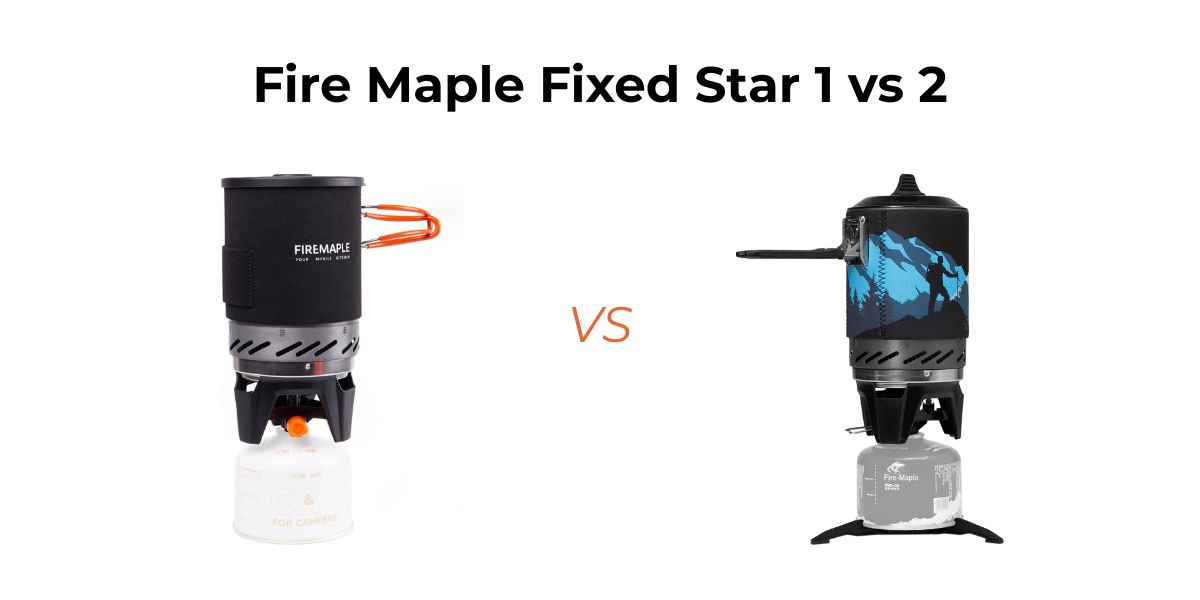
| Features | Fixed Star 1 | Fixed Star 2 |
|---|---|---|
| Amazon Price | $49 | $74 |
| Power Output | 1500W / 5,115 BTU | 2200W / 7,500 BTU |
| Pot Capacity | 1.5L | 1.0L |
| Weight | 511g (18 oz) | 600g (22 oz) |
| Boil Time (1L) | 10:20 minutes | 3-3.5 minutes |
| Boil Time (500ml) | 3:25 minutes | 1:42 minutes |
| Pan Support | ✗ (sold separately) | ✓ Included |
| Canister Stand | ✗ (sold separately) | ✓ Included |
| Locking Handle | No❌ | Yes✅ |
| Best For | Solo boiling only | 1-2 people, versatile use |
| Where To Buy | Check On Amazon | Check On Amazon |
The Accessories Math That Breaks Everything
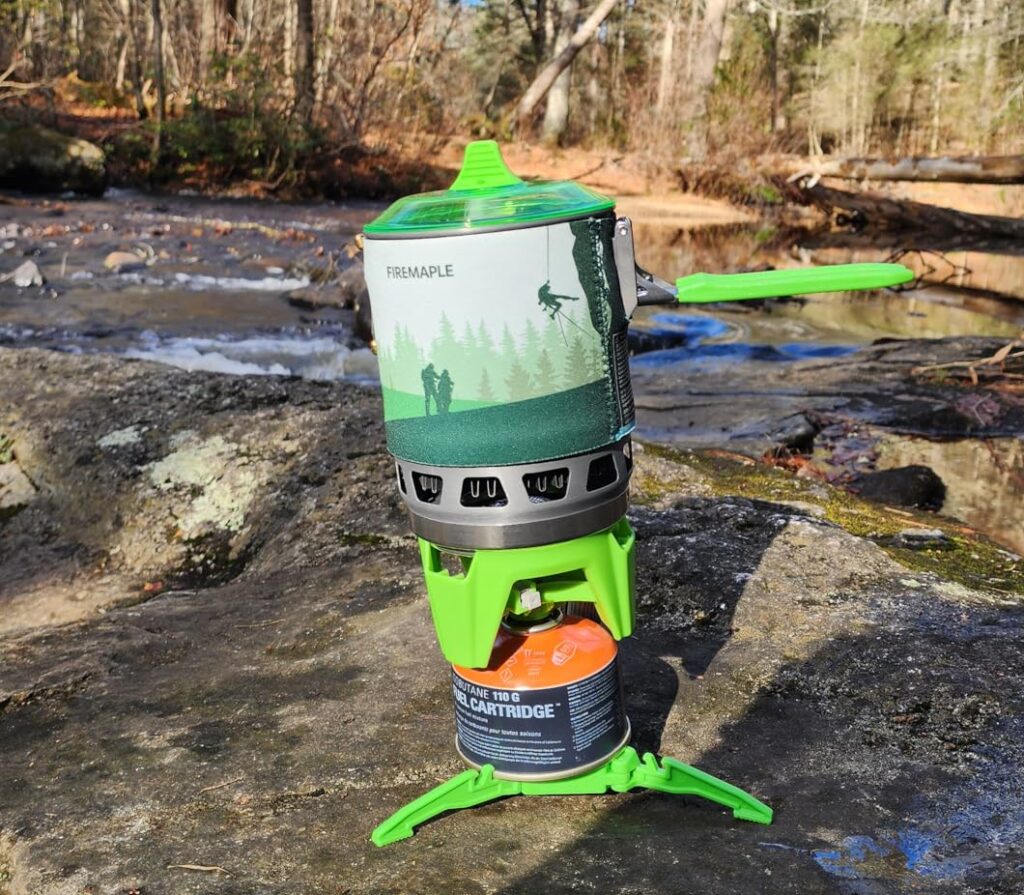
Let me show you the numbers that manufacturers don’t want in the same place:
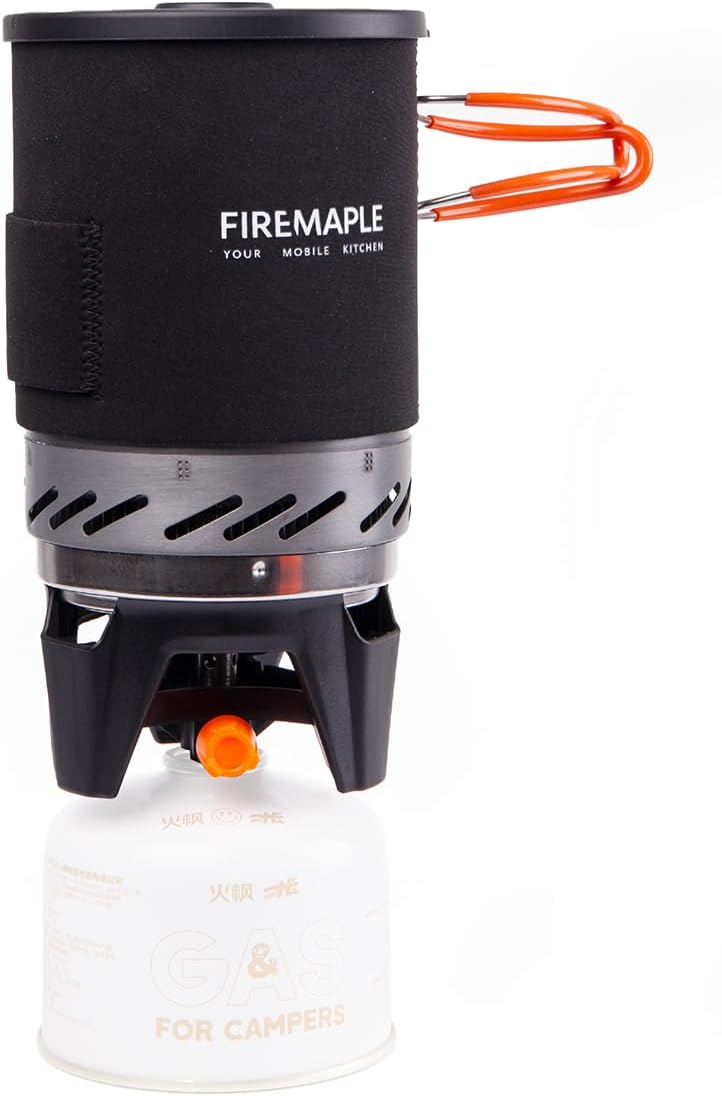
Fire Maple Fixed Star 1 at $49 includes:
- The burner unit
- 1.5L heat-exchange pot with lid
- Folding handle
- Storage bag
Fire Maple Fixed Star 1 at $49 DOESN’T include:
- Pan support (pot stand) for cooking with other pots/pans
- Canister stabilizer for keeping everything upright
- Locking mechanism on the handle
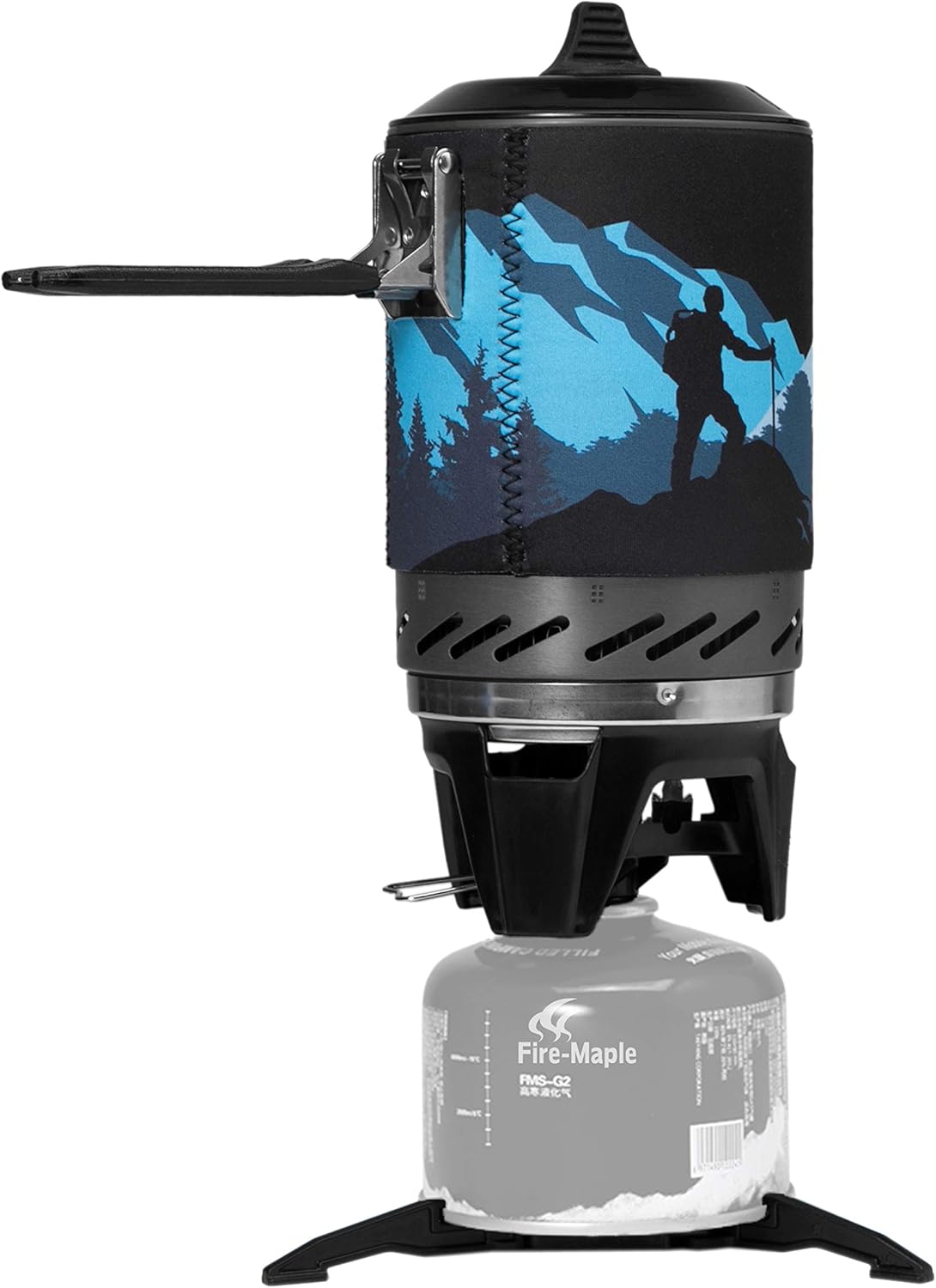
Fire Maple Fixed Star 2 at $74 includes:
- The burner unit (47% more powerful)
- 1.0L heat-exchange pot with lid
- Locking folding handle
- Pan support (pot stand) ✓
- Canister stabilizer ✓
- Storage bag
Now here’s where it gets interesting. If you buy the X1 and later realize you need these accessories:
- Pan support sold separately: ~$15
- Canister stabilizer sold separately: ~$10
- Total: $49 + $25 = $74
The exact same price as the X2. Except now you’re using a less powerful stove with slower boil times.
This isn’t theoretical. I found multiple reviews from X1 owners who said variations of: “The biggest issue for me is the missing cooking attachment. On the few occasions I’ve wanted to cook up some sausages and bacon on a pan, I’ve been unable to do so. An attachment is available at extra cost, but I’m unsure if it can be stowed in the device.”
The real question isn’t whether to save $25. It’s whether you’re okay buying an incomplete system that you’ll probably upgrade later anyway.
The Stability Crisis: Why X1 Owners Hold Their Breath?
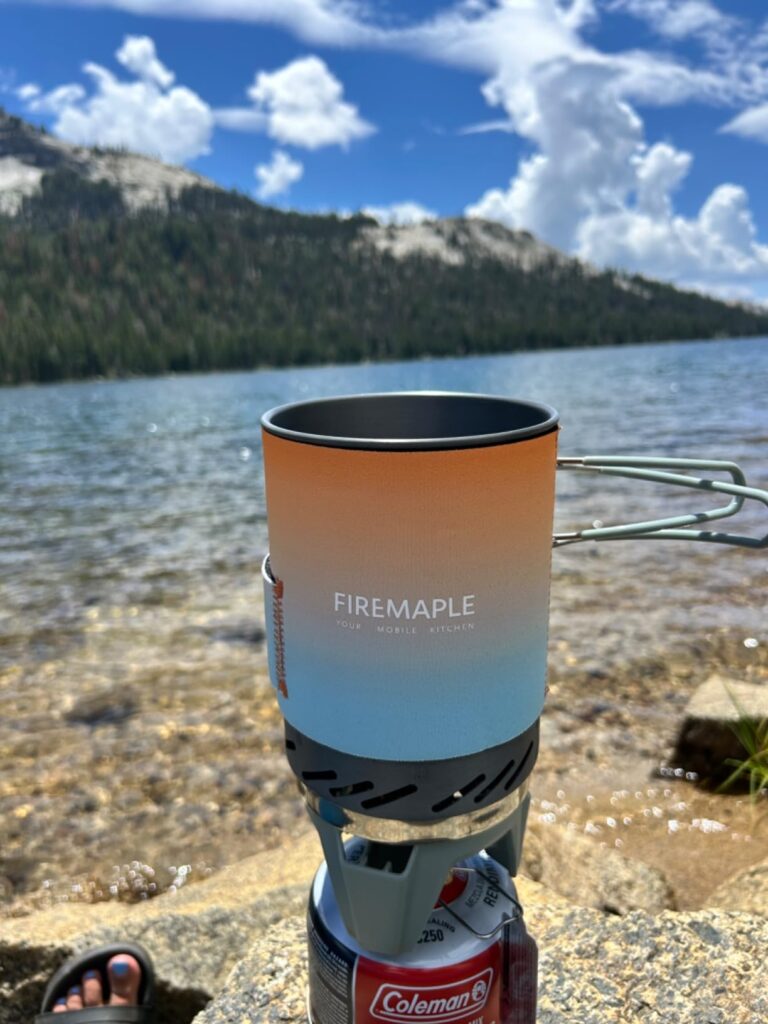
This is the issue that appears in nearly every X1 review, though it’s usually buried halfway through: the X1 is dangerously top-heavy without the stabilizer base.
One long-term X1 owner put it this way: “The X1 is very top-heavy, and in wind or on uneven surfaces, I’ve had to hold it steady to keep it from falling over.”
Think about that for a second. You’re out camping, you’re tired, it’s dark, and you have to physically steady your stove while boiling water because it might tip over.
Here’s what happens when it tips:
- Boiling water everywhere (burn risk)
- Wasted fuel (expensive on multi-day trips)
- Potential fire hazard if fuel canister disconnects
- Ruined dinner if you were actually cooking
The X2 solves this completely with its included canister stand. It’s a three-legged base that attaches to the fuel canister and dramatically improves stability on uneven ground. Multiple X2 reviews specifically call out how much more confident they feel using it on rocky terrain or in windy conditions.
Now, Fire Maple responded saying this might have been a manufacturing defect. But notice what didn’t happen to the reviewer’s friend who brought an X2 on the same trip—no wobbling, no issues.
The canister stand isn’t just about convenience. It’s about not having to babysit a potentially dangerous situation.
The Power Problem: Why X1 Takes 3x Longer to Boil
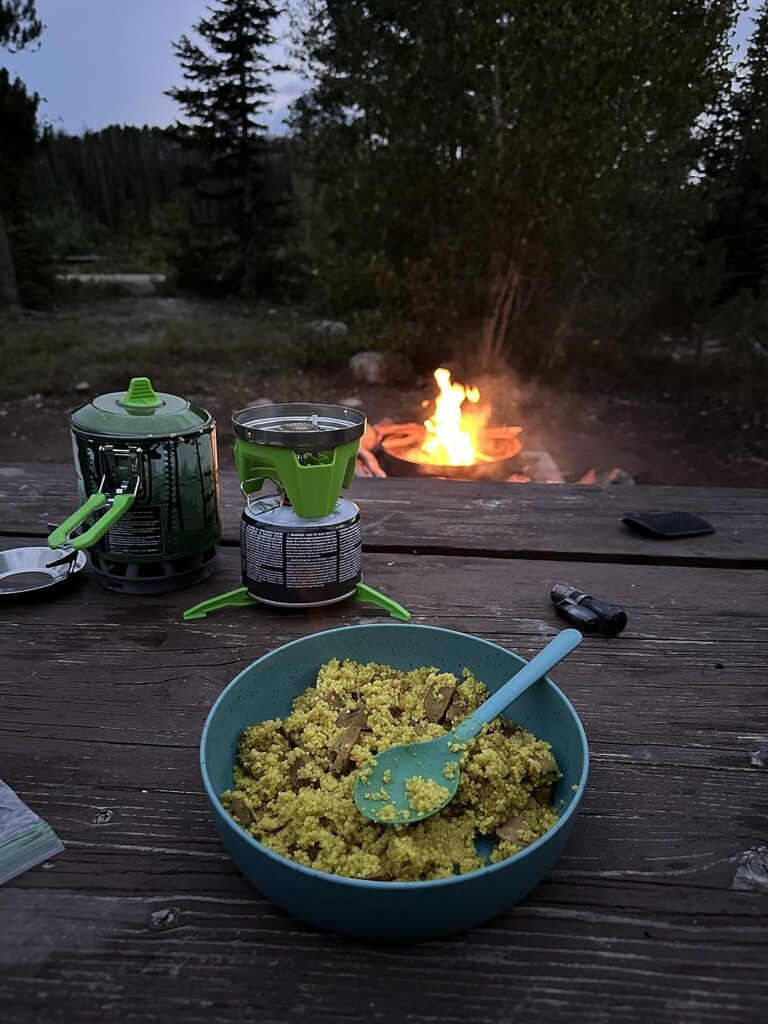
Here’s where the specs tell a story that marketing materials don’t.
Fire Maple X1:
- Power: 1500W (5,115 BTU)
- Pot capacity: 1.5L
- Boil time for 1L: 10 minutes 20 seconds
- Boil time for 500ml (2 cups): 3 minutes 25 seconds
Fire Maple X2:
- Power: 2200W (7,500 BTU)
- Pot capacity: 1.0L
- Boil time for 1L: 3-3.5 minutes
- Boil time for 500ml: 1 minute 42 seconds
See the issue? The X1 has a huge 1.5L pot but only 1500W to heat it. The X2 has a smaller 1L pot but 2200W of power—a much better power-to-volume ratio.
In practical terms, this means:
- Morning coffee on the X1: 10+ minutes waiting
- Morning coffee on the X2: 3.5 minutes and you’re caffeinated
- Making dinner for two on X1: 10 minutes per liter = 20 minutes total
- Making dinner for two on X2: Two 3.5-minute cycles = 7 minutes total
That extra 7-10 minutes might not sound like much. But when it’s cold, when you’re exhausted after hiking all day, when you just want to eat and sleep—those minutes feel eternal. And they compound. Three meals a day over a weekend trip? You’re spending an extra 40+ minutes just watching water boil.
The X2’s higher power output also means better performance in:
- Cold weather (when fuel pressure drops)
- High altitude (where oxygen is thinner)
- Windy conditions (more heat stays in the system)
What “Heat Exchange System” Actually Means? (And Why You Can’t Cook With It)
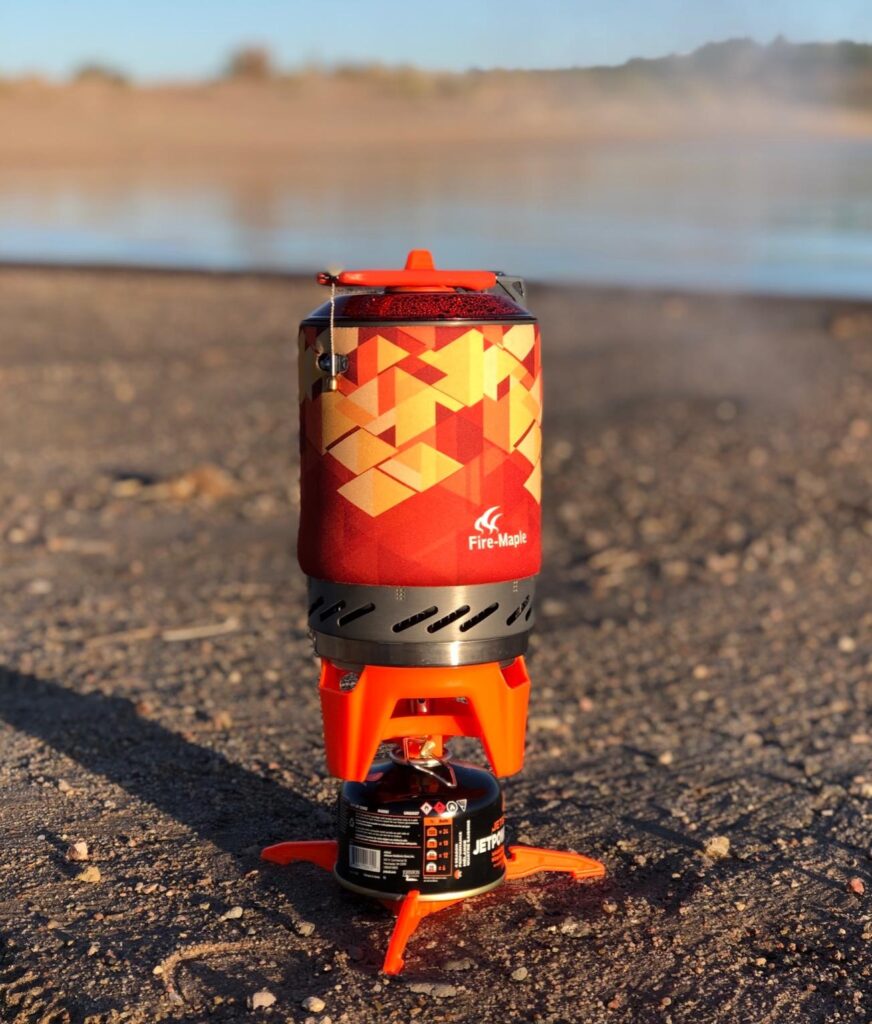
Both stoves use what’s called a heat exchange (HX) design. The pot has metal fins on the bottom that capture more heat from the burner, making water boil faster while using less fuel.
Sounds great, right? And it is—for boiling water.
But here’s what Fire Maple doesn’t emphasize: these systems are terrible for actual cooking.
The heat exchanger makes temperature control nearly impossible. Try to simmer something gently? Can’t do it. Try to fry eggs? They’ll scorch on the bottom before cooking on top. Try to cook rice? Good luck not burning it.
One experienced backpacker on the WhiteBlaze forum warned: “Don’t try to cook in a jetboil or jetboil-like apparatus… The designs are really intended for boiling and are notorious for scorching/charring food at the bottom.”
So if both stoves are bad at cooking, why does this matter for our comparison?
Because the X2 includes a pan support that lets you use OTHER pots and pans on the burner. You can:
- Use a regular pan for frying bacon and eggs
- Use a smaller pot for simmering sauces
- Use your own cookware that you already own
- Actually cook food instead of just rehydrating freeze-dried meals
The X1 doesn’t include this. Without the pan support accessory (which, remember, costs extra), you’re stuck using only the heat-exchange pot—which means you’re stuck only boiling water.
The Locking Handle: Small Feature, Big Difference
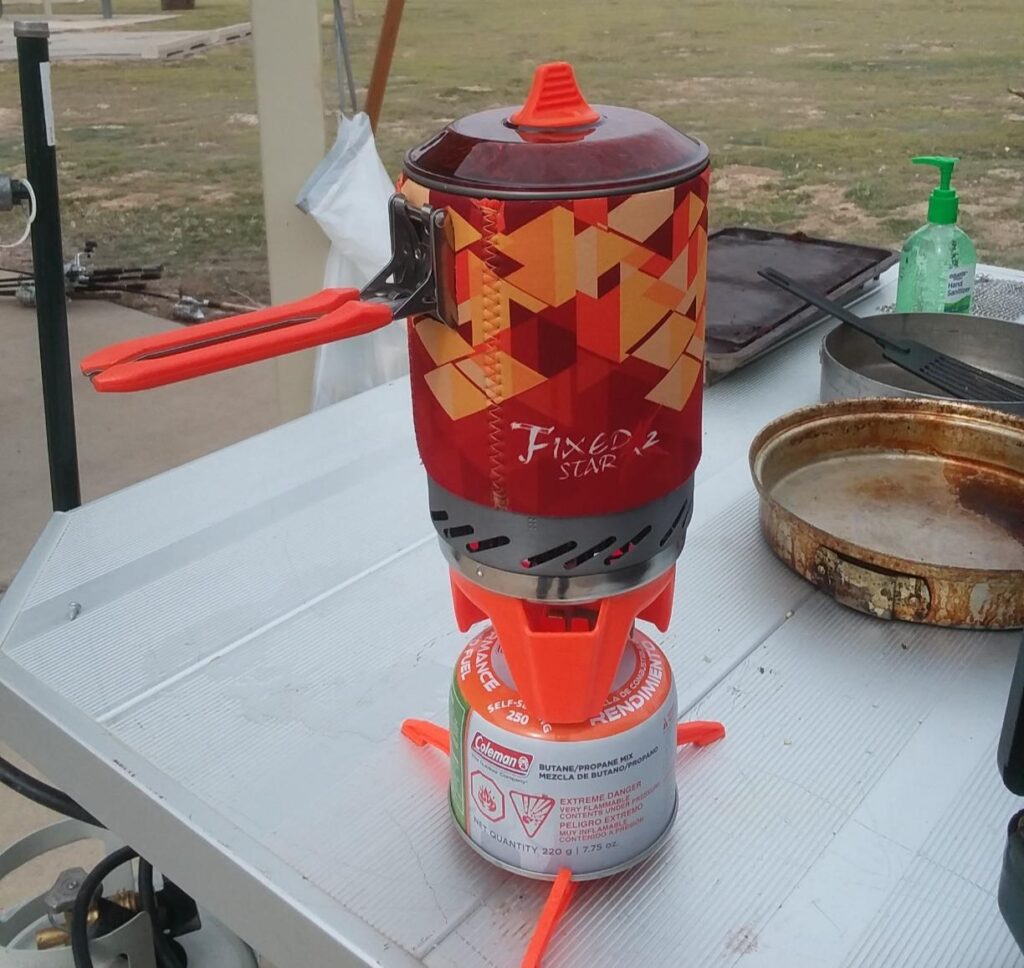
This seems minor until you’re carrying a pot of boiling water down a rocky slope in the dark.
The X1 has a basic folding handle. It folds down for storage and folds up for use. That’s it.
The X2 has a locking folding handle. It locks in both the folded position (for secure storage) and the upright position (for safe carrying).
Why does this matter?
When folded:
- X1 handle can pop open in your pack, snagging on other gear
- X2 handle stays locked, keeping everything compact
When carrying:
- X1 handle can fold down mid-carry if you bump it (catastrophic with boiling water)
- X2 handle locks open, giving you confidence that it won’t collapse
Is this a dealbreaker on its own? No. But combined with everything else? It’s another example of X2 being the more complete, thought-out system.
The Size Paradox: Why Smaller Is Actually Better
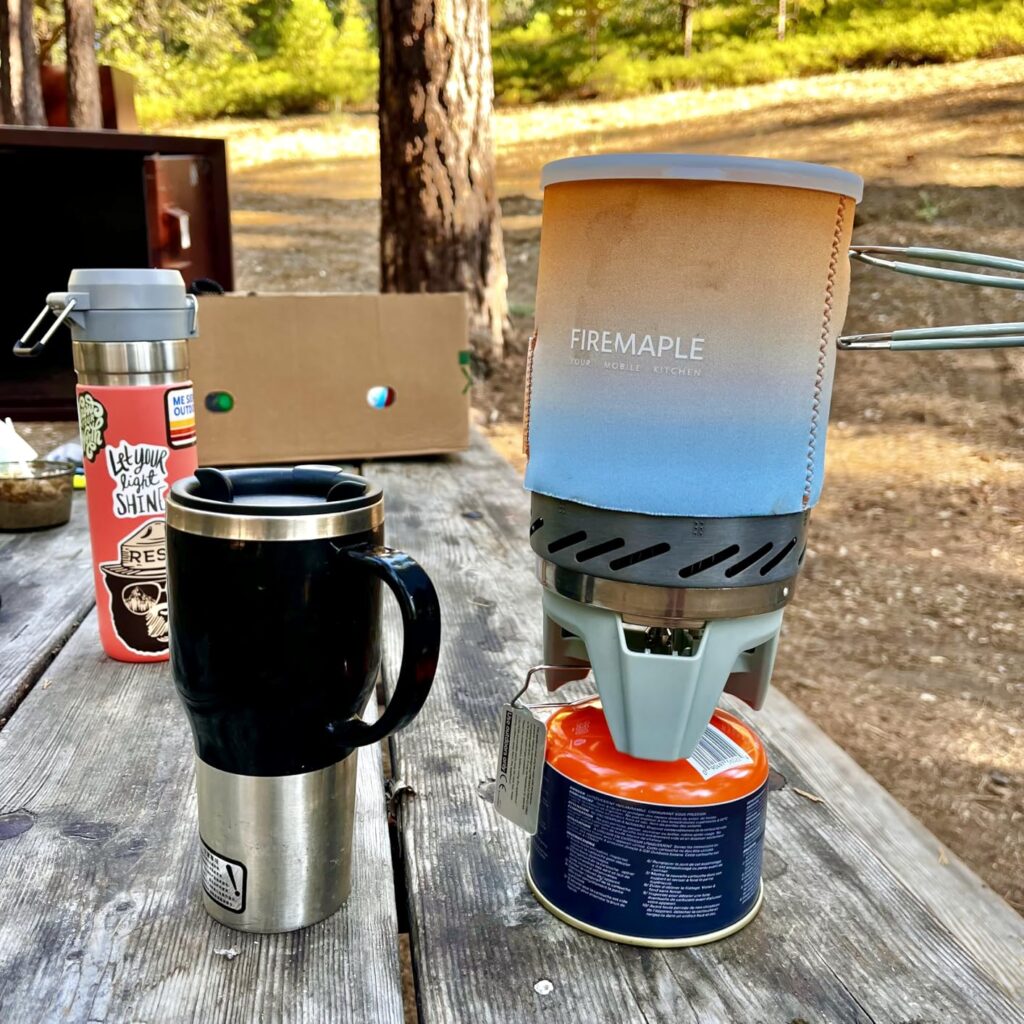
This is counterintuitive, so let me explain.
The X1 has a 1.5L pot. The X2 has a 1.0L pot. On paper, bigger seems better—more capacity means more versatility, right?
Wrong. Here’s why the X2’s smaller size is actually an advantage:
The X1’s 1.5L pot:
- Only effective capacity of about 1L (you can’t fill it to the brim)
- Underpowered burner can’t efficiently heat the full volume
- Heavier (511g vs 600g… wait, let me explain)
- Taller when assembled = more top-heavy = stability issues
The X2’s 1.0L pot:
- Perfectly matched to the burner’s power output
- Right-sized for 1-2 people, which is 90% of backpacking scenarios
- More efficient heating = less fuel wasted
Here’s the weight situation: Yes, the X2 system weighs 600g (22 oz) compared to X1’s 511g (18 oz). That’s an 89g (3.14 oz) difference.
But remember: the X2 includes accessories that the X1 doesn’t. If you buy those accessories separately for your X1, the weight difference disappears.
That’s a lot of work to make the “budget option” function like the more expensive option should have out of the box.
The Fuel Canister Nesting Trap
Both stoves advertise that fuel canisters nest inside for compact storage. This is true—but there’s a catch nobody explains clearly.
Coleman 230g flat canisters won’t nest inside either pot. They’re slightly wider than standard EN417 canisters and will only fit underneath the pot, not inside.
For proper nesting:
- X1: Use 110g/100g canisters
- X2: Use 220g/230g standard EN417 canisters (not Coleman brand)
Why does this matter? If you’re already buying Coleman fuel at your local store, you’ll need to either:
- Switch fuel brands to get the nesting benefit
- Carry the canister separately (losing the compact advantage)
It’s not a dealbreaker, but it’s another small detail that affects real-world use.
The Verdict: Your Decision Tree
You’re on the absolute tightest budget ($49 is your limit)
Choose X1 — but accept you’re getting an incomplete system. You’ll boil water slowly, need to steady it on uneven ground, and can’t cook anything beyond rehydrating meals. If you’re truly broke and just need something that works for basic water boiling, the X1 will do that.
You can stretch to $74
Choose X2 — you’re getting everything you need plus 47% more power, 3x faster boiling, and actual cooking versatility with the pan support. This is the better value when you consider what’s included.
You already own the X1 and wondering about upgrading
Evaluate your pain points: If you’ve been frustrated by slow boiling, stability issues, or wanting to cook with other pots, the X2 solves all three. If you’re happy just boiling water and haven’t had stability problems, stick with what you have.
You’re going solo ultralight backpacking
Consider neither — Both systems are relatively heavy for ultralight pursuits. The X1 at 18 oz is lighter but still heavy compared to a simple alcohol stove (2 oz) or a bare canister stove (2.5 oz). If weight is everything, look at MSR PocketRocket or similar.
You’re cooking for 2+ people regularly
Choose X2 — The X1’s 1500W burner is underpowered for groups. You’ll spend 20+ minutes boiling water for two people. The X2’s higher power and versatility make group cooking actually reasonable.
My Honest Take: Fire Maple Fixed Star 1 vs 2
After everything I’ve researched, here’s what I’d do with my own money:
If I had exactly $49 and absolutely couldn’t afford more, I’d buy the X1 knowing its limitations. I’d be extra careful about stability, accept the slow boil times, and plan to only use it for rehydrating freeze-dried meals.
But if I could possibly stretch to $74, I’d buy the X2 without hesitation. Not because it’s “better” in some abstract way, but because it’s actually the more economical choice once you factor in:
- The accessories you’ll probably buy anyway ($25)
- The time you’ll save on every boil (compound that over dozens of trips)
- The frustration you’ll avoid from stability issues
- The versatility to actually cook when you want to
The X1 is cheaper to buy. The X2 is cheaper to own.
That’s the difference that matters.
FAQs
Which fuel canisters work best with each stove?
Both work with standard EN417 threaded canisters (MSR, Primus, Snow Peak, etc.). For nesting inside the pot: X1 works best with 110g canisters, X2 works best with 220-230g standard canisters. Coleman flat canisters won’t nest inside either pot but will work with the stoves.
How do these compare to Jetboil?
The X2 performs nearly identically to Jetboil Flash in most tests, at half the price ($74 vs $110-130). Jetboil has better brand support and warranty service, but Fire Maple offers exceptional value. Multiple reviewers who owned both said the performance difference didn’t justify Jetboil’s price premium.
Can I use these stoves for winter camping?
Both are unregulated stoves, meaning performance drops in cold weather. The X2’s higher power output (2200W vs 1500W) gives it more buffer for cold weather use. For serious winter camping below 20°F, consider a regulated stove like MSR WindBurner.
Will these stoves work at high altitude?
Yes, but with reduced efficiency due to thinner air. Again, the X2’s higher power output makes it more viable for altitude use. Neither stove is ideal for extreme altitude (15,000+ feet).
How fuel-efficient are they really?
The X2 consumes more fuel per hour (158g/h vs 100g/h) but boils water 3x faster, so the total fuel per boil is similar or actually less due to reduced heat loss. In real-world use, both systems are reasonably efficient for integrated canister stoves.
Can I replace just the burner unit if it fails?
Fire Maple sells replacement parts, though availability varies by region. The pots are standard and will outlast the burner units. This is one advantage over Jetboil—Fire Maple parts are generally cheaper and more available internationally.
Do these work with fuel canisters from different brands?
Yes, both use the standard EN417 threaded connection, which is universal across most camping fuel brands (MSR, Primus, Snow Peak, Coleman, etc.). Just avoid off-brand canisters with questionable safety certifications.