

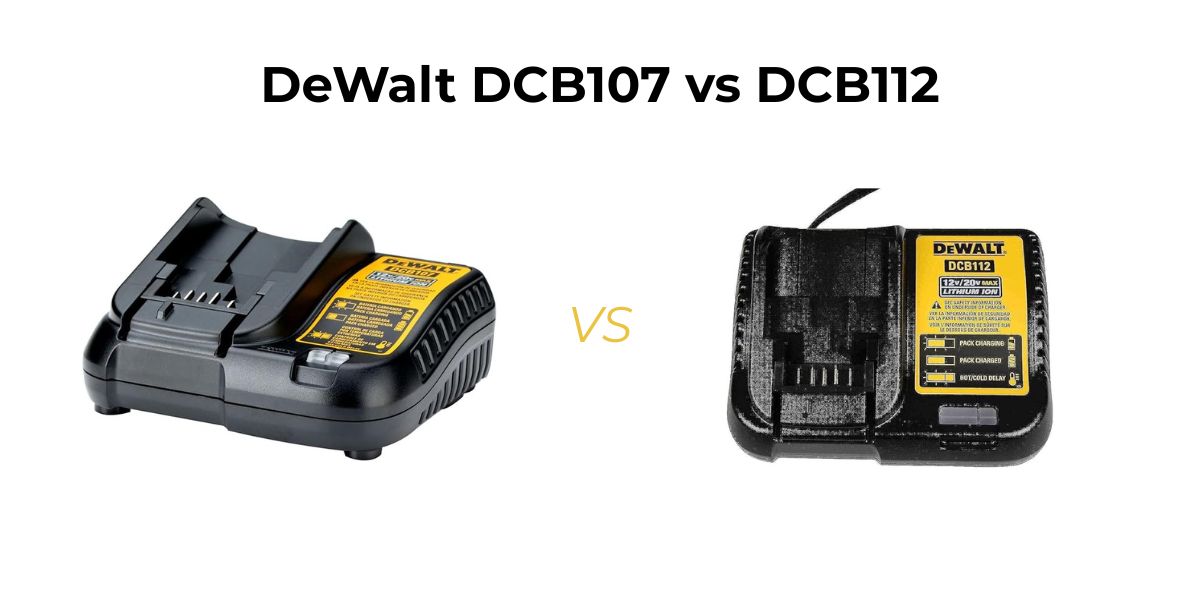
Amazon Ratings: 4.7/5 
Current Price: $21
Best For: DIYers and multi-battery owners who charge overnight.
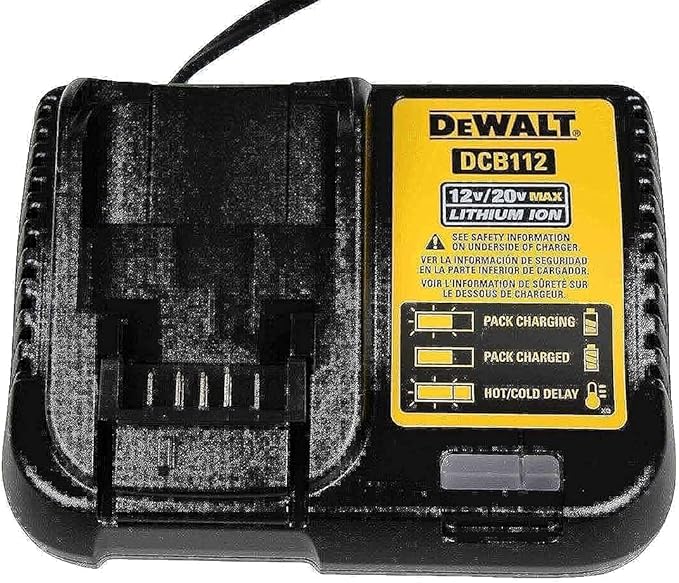
Amazon Ratings: 4.7/5
Current Price: $26
Best For: contractors and single-battery users who need quick turnaround.
Introduction
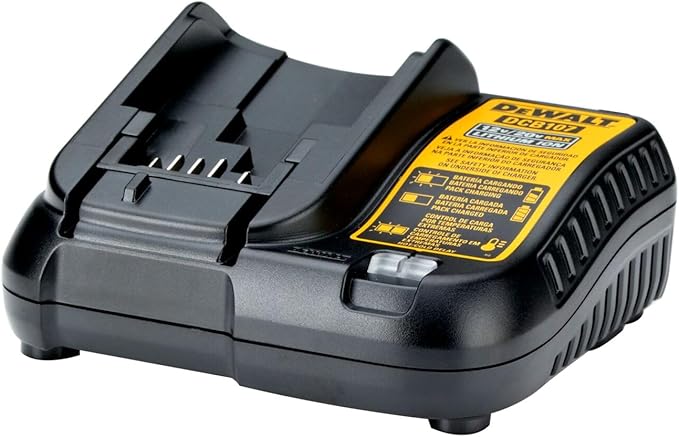
You’re looking at two DeWalt chargers that look almost identical. Same black plastic housing. Same yellow DeWalt branding. Both charge 12V and 20V MAX batteries. And somehow, the DCB112 is actually cheaper at $21 compared to the DCB107 at $26.
That doesn’t make sense, right? Why would anyone buy the more expensive one?
The answer isn’t in some spec sheet comparison. It’s in understanding how these chargers actually work in your daily routine—and where one quietly destroys batteries while the other protects your investment.
Table of Contents
DeWalt DCB107 vs DCB112: Quick Specs Comparison
| Features | DCB107 | DCB112 |
|---|---|---|
| Price | $26 | $21 |
| Charge Speed (2.0Ah) | ~30 minutes | ~90 minutes |
| Battery Compatibility | 12V/20V MAX | 12V/20V MAX |
| Heat Generation | Higher | Lower |
| Battery Longevity Impact | Faster degradation | Better preservation |
| Best For | Contractors, single-battery users | DIYers, multi-battery owners |
| Where To Buy | Check On Amazon | Check On Amazon |
The One Thing That Actually Matters
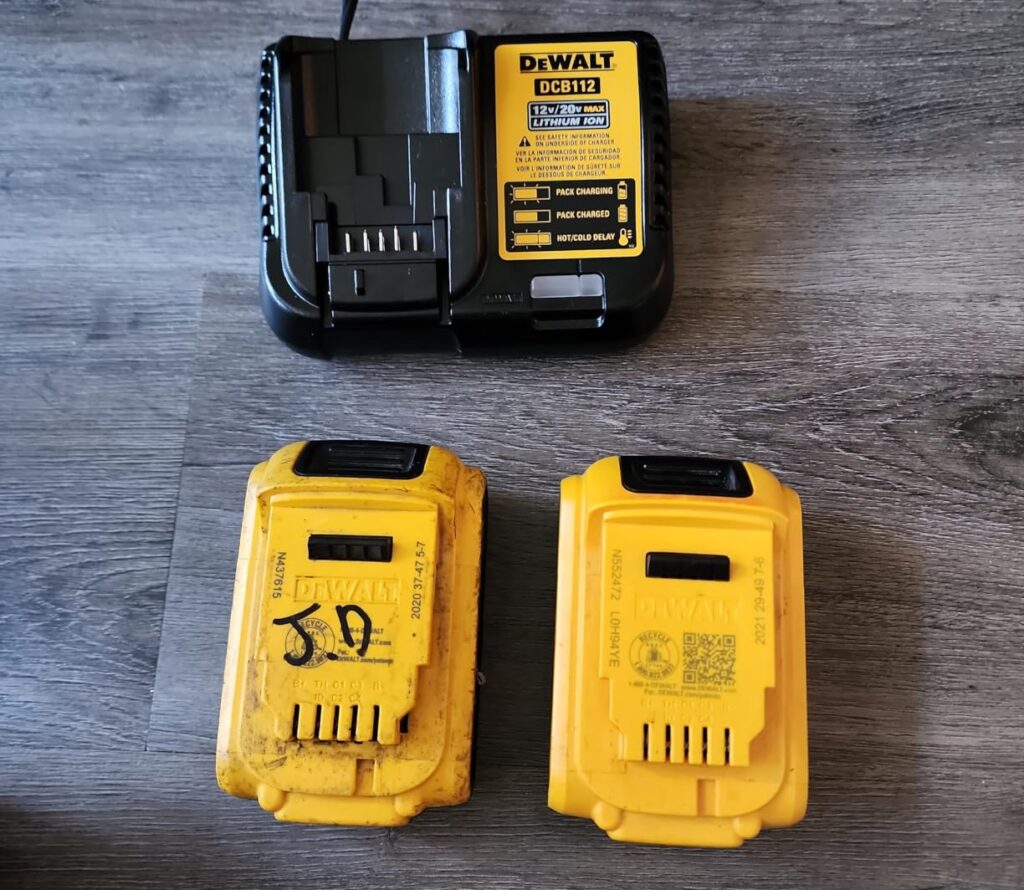
Both Dewalt DCB107 vs DCB112 chargers do the same basic job: they take a dead DeWalt battery and make it usable again. But they do it at completely different speeds, and that speed difference creates a problem most people don’t realize until it’s too late.
The DCB107 is the faster one. It’ll charge a depleted 2.0Ah battery in about 30 minutes. The DCB112 takes roughly 90 minutes for that same battery. On paper, faster sounds better. And sometimes it is.
But here’s what DeWalt’s marketing doesn’t tell you: faster charging generates more heat. Heat is the silent killer of lithium-ion batteries. Every time you fast-charge a battery, you’re trading convenience today for capacity tomorrow. Those batteries that used to run your drill for 45 minutes? After a year of fast charging, you’re down to 35 minutes, then 30, then you’re wondering why your “barely used” batteries are garbage.
The DCB112 charges slower precisely because it’s gentler on the batteries. Less current means less heat. Less heat means your batteries maintain their capacity longer. If you’re someone who owns multiple DeWalt tools and has invested hundreds of dollars in batteries, this matters more than you think.
Related Articles:
When Speed Actually Wins?
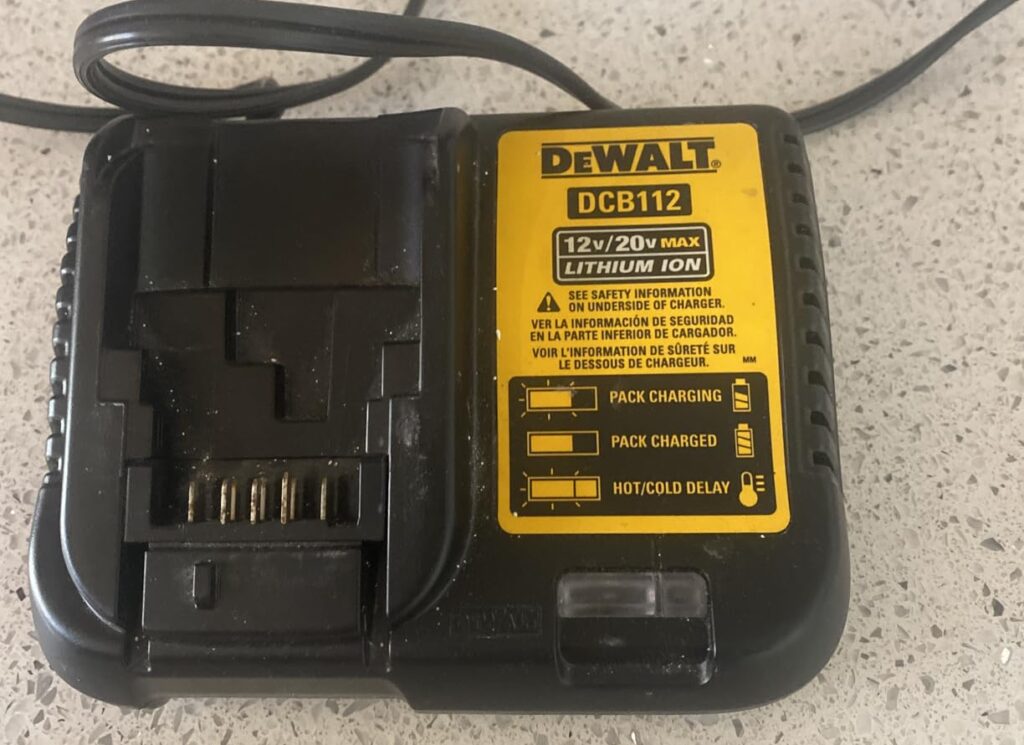
There are absolutely situations where you need the DCB107’s speed. You’re in the middle of a job, your battery dies, and you don’t have a backup charged. You need that tool working again in 30 minutes, not 90. That’s when fast charging justifies itself.
The DCB107 makes sense if you only own one or two batteries and you regularly run them dry mid-project. Construction workers who are constantly swapping batteries throughout the day often prefer faster chargers because downtime costs money. The slight decrease in long-term battery life is offset by the increased productivity.
It also makes sense for professionals who cycle through batteries so quickly that they’re replacing them every 18-24 months anyway. If you’re using your tools hard enough that batteries become consumables, might as well get the convenience of fast charging.
When Slower Saves You Money?
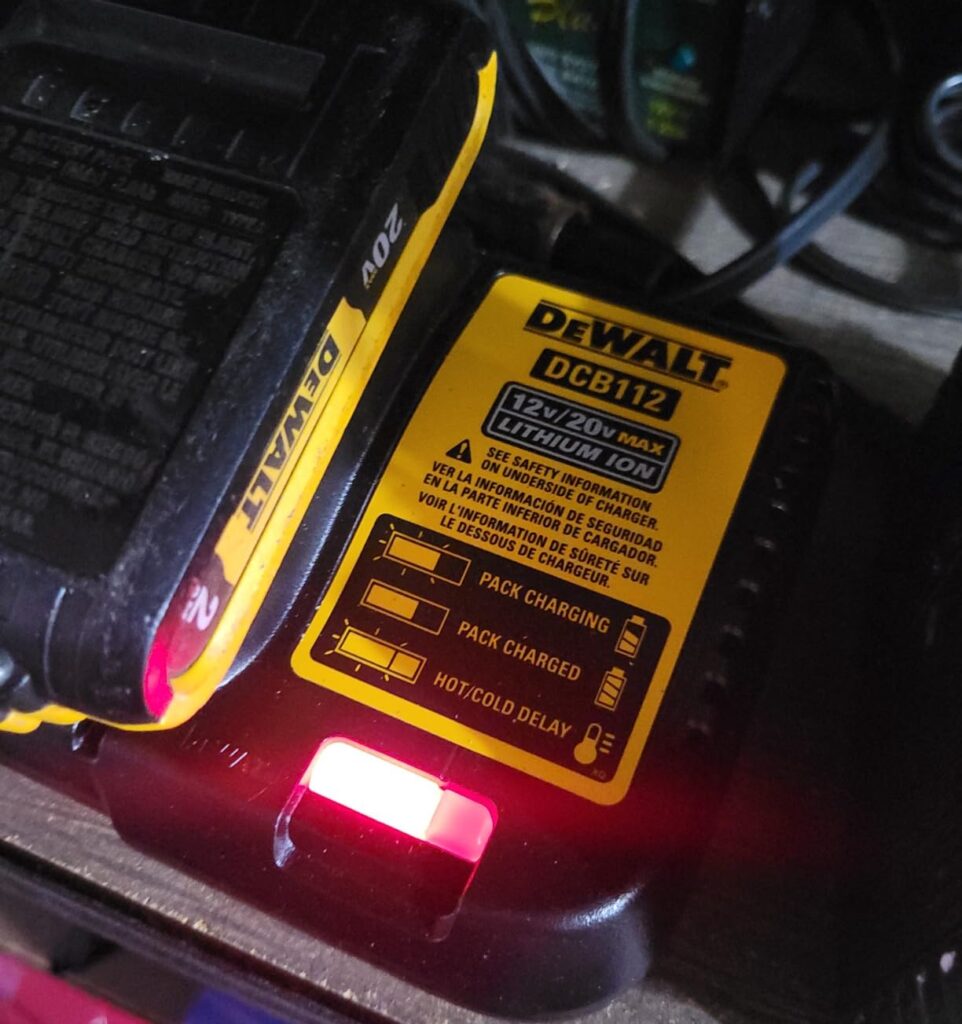
Most DIYers and homeowners fall into a different category. You charge your batteries overnight or between projects. You’re not racing against a job deadline. You probably spent $50-$150 per battery, and you’d like them to last more than a couple years.
For this use case, the DCB112 is objectively better despite being cheaper. You’re getting a charger that’s easier on your batteries, and you’re saving $5 upfront. The batteries will hold their charge capacity longer, which means you won’t be replacing them as often.
Think about the math: if the DCB112’s gentler charging extends your battery life by even 6 months, you’ve saved way more than the $5 price difference. A 4.0Ah DeWalt battery costs around $70-80. If you own three batteries and each one lasts an extra year because of slower charging, that’s potentially $200+ saved.
The Hidden Compatibility Gotcha
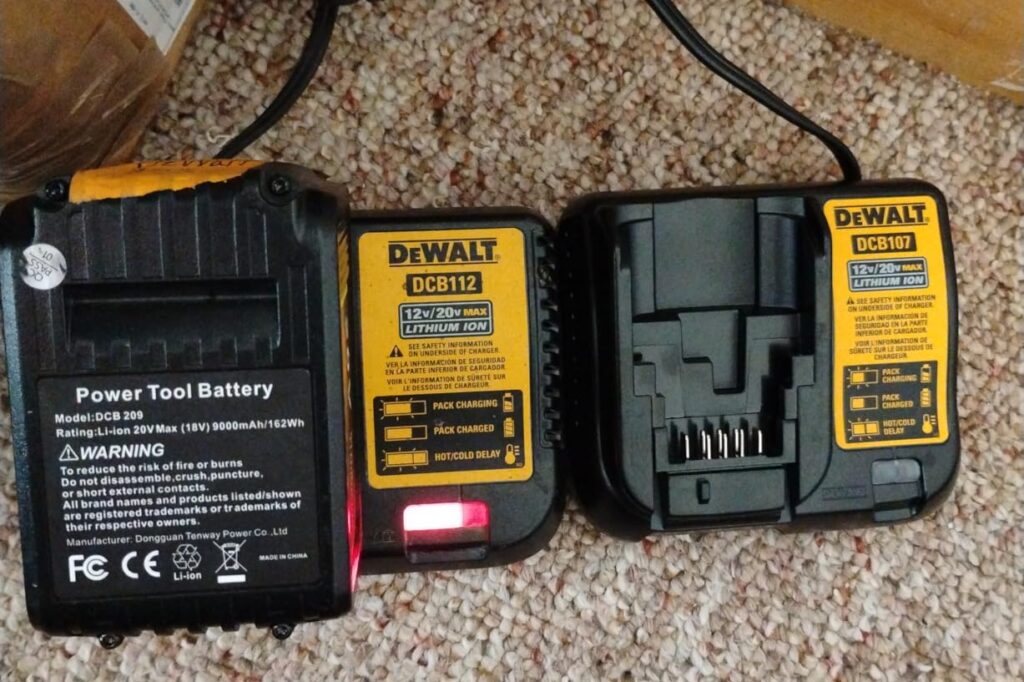
Both chargers work with 12V and 20V MAX batteries, but neither one charges the FlexVolt (60V/20V) batteries. If you have or plan to get FlexVolt batteries, you need a different charger entirely (like the DCB118). This catches people off guard because they assume all modern DeWalt chargers handle all modern DeWalt batteries.
Also worth noting: these are both basic chargers without any USB ports, diagnostic lights, or battery health indicators. You get a simple red light (charging) and green light (done). Some of DeWalt’s other chargers in the $40-60 range offer more features, but these two are stripped-down basics.
Which One Makes Sense for You?
The DCB112 at $21 is the better value for most people reading this. Unless you regularly find yourself in situations where you’re waiting on a battery to charge mid-project, the speed difference doesn’t matter enough to justify the extra cost and decreased battery longevity.
Get the DCB107 if you only own one battery and you need it ready quickly. Get the DCB107 if you’re a contractor who cycles through batteries daily and replaces them annually anyway. Get the DCB107 if you value convenience over battery preservation.
Amazon Ratings: 4.7/5
Current Price: $26
Best For: contractors and single-battery users who need quick turnaround.
Get the DCB112 if you charge batteries overnight or between projects. Get the DCB112 if you want your batteries to last as long as possible. Get the DCB112 if you own multiple batteries and can rotate them. Get the DCB112 if you’re trying to save money both upfront and long-term.
Amazon Ratings: 4.7/5
Current Price: $21
Best For: DIYers and multi-battery owners who charge overnight.
The weird pricing (cheaper charger being better for most people) is actually a gift. DeWalt knows that contractors—their primary market—will pay more for speed, so they price the DCB107 higher. But for everyone else, the DCB112 is sitting right there at a lower price, doing the smarter thing for your batteries.
What About Buying Multiple Chargers?
Some people buy multiple chargers to speed up their workflow without actually fast-charging any single battery. If you have four batteries and two DCB112 chargers, you can charge two batteries at a time while using the other two. This gives you the practical benefit of always having charged batteries available without the heat-stress of fast charging.
Two DCB112 chargers cost $42 total—still cheaper than some of DeWalt’s premium single chargers. This strategy works especially well if you have a workshop where you can leave chargers plugged in permanently. Just drop depleted batteries on the chargers and grab charged ones as needed.
The Bottom Line: DeWalt DCB107 vs DCB112
Amazon Ratings: 4.7/5
Current Price: $21
Best For: DIYers and multi-battery owners who charge overnight.
The DCB107 exists because sometimes people need speed and are willing to pay for it in both money and battery longevity. The DCB112 exists because DeWalt knows most people just need their batteries charged by tomorrow morning, and slower is actually better for the batteries anyway.
You’re not choosing between a good charger and a bad charger. You’re choosing between a fast charger that trades battery life for convenience, and a slower charger that protects your battery investment while costing less.
For 80% of DeWalt users, the DCB112 is the obvious choice. It’s cheaper, it’s gentler on batteries, and the only thing you sacrifice is speed you probably didn’t need anyway. The DCB107 is for the 20% of users who genuinely need batteries ready in 30 minutes instead of 90, and who are okay with replacing batteries more frequently as a trade-off.
That’s the actual difference. Not specs. Not features. Just a fundamental trade-off between speed and battery preservation—and whether that speed is worth $5 more plus shorter battery life.
FAQs about DeWalt DCB107 vs DCB112
Does the DCB107 damage batteries faster? Not damaged, but degraded. Faster charging creates more heat, which reduces battery capacity over time. You’ll notice shorter runtime after a year or two of regular use.
Can I use either charger with 60V FlexVolt batteries? No. Both only work with 12V and 20V MAX batteries. FlexVolt batteries need a different charger like the DCB118.
How much faster is the DCB107 really? About 3x faster. A 2.0Ah battery charges in 30 minutes on the DCB107 versus 90 minutes on the DCB112. Larger batteries take proportionally longer on both.
Why is the slower charger cheaper? DeWalt prices the DCB107 higher because contractors pay premium for speed. The DCB112 being cheaper is actually a win for DIYers who don’t need fast charging.
Can I leave batteries on the charger overnight? Yes, both chargers stop charging when the battery is full. However, it’s still better practice to remove batteries once charged to maximize their lifespan.
Will buying two DCB112 chargers give me the same speed as one DCB107? Not the same speed per battery, but you can charge two batteries simultaneously for $42 total—better workflow without the heat stress of fast charging.