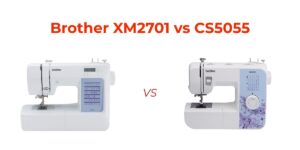

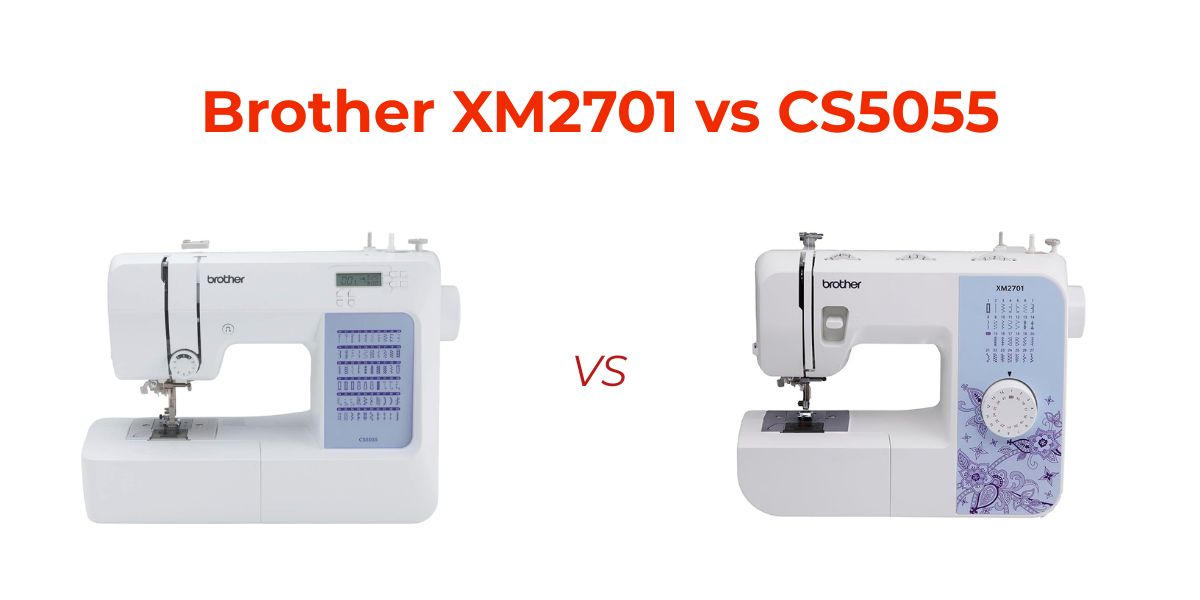
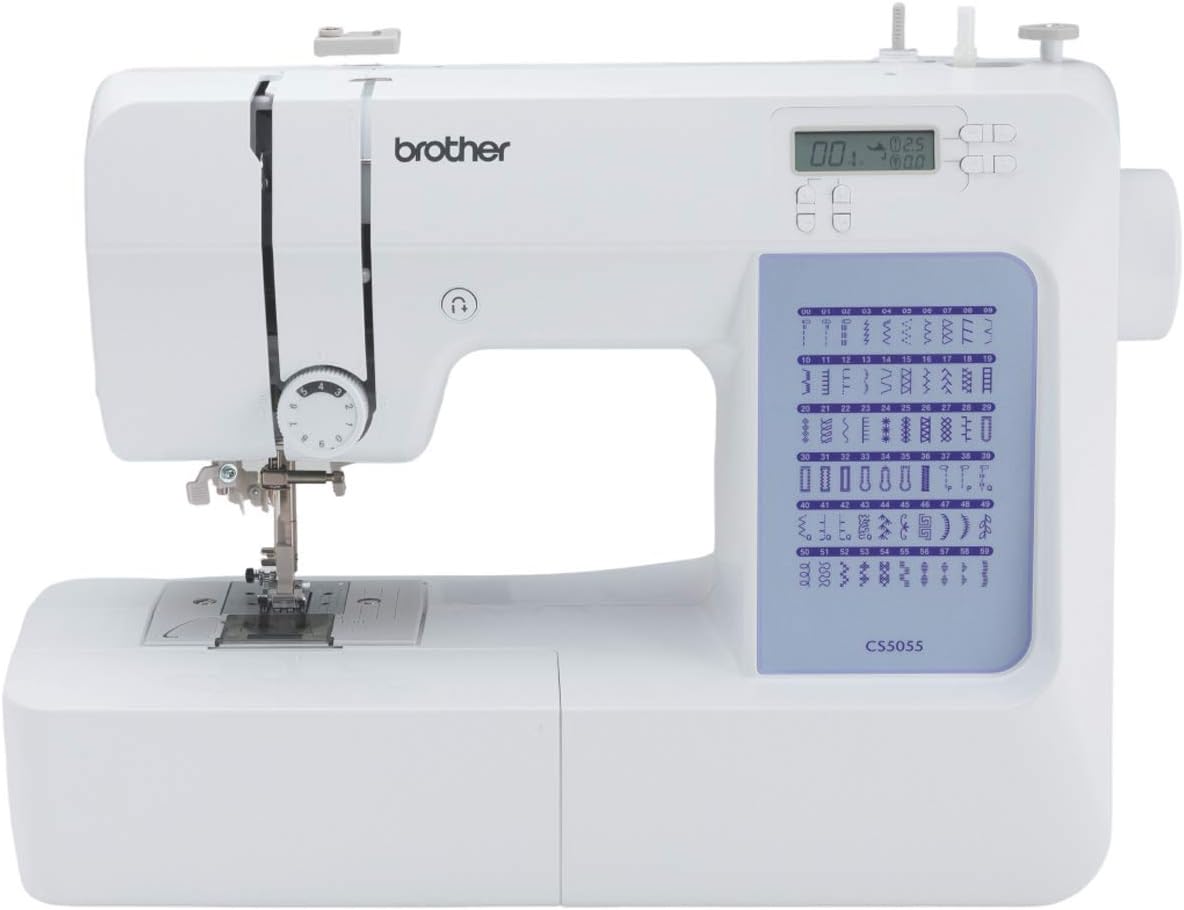
Current Price: $134
Key Specs:
- 50 stitches
- 850 SPM
- 10.65 lbs
- LCD display + computerized
Best For: Beginners who want digital guidance and quieter operation
Heads Up: More features create menu navigation complexity for simple tasks
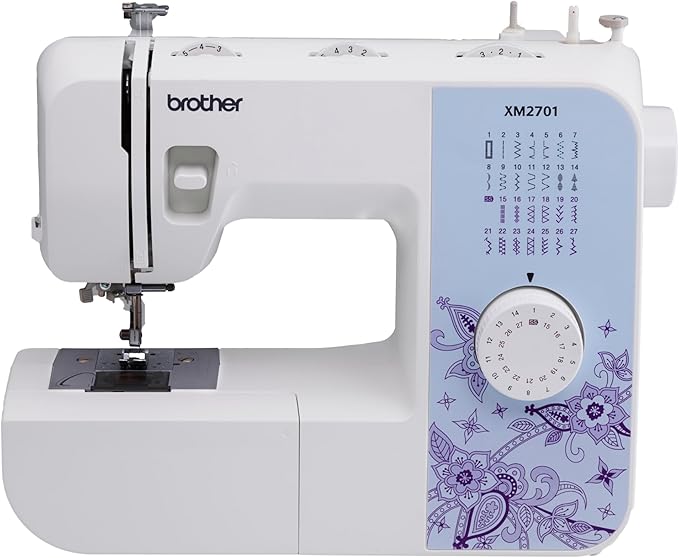
Current Price: $129
Key Specs:
27 stitches
800 SPM
12.6 lbs
Mechanical dial control
Best For: Beginners who learn by doing and prefer simple, mechanical controls
Heads Up: Automatic needle threader breaks frequently within first year
Introduction
You’ve probably spent hours reading specs about these two sewing machines (Brother XM2701 vs CS5055). Specs tell you that these are basically the same: the CS5055 has more stitches, a fancy LCD screen, and costs more money. End of story, right?
Wrong.
Here’s what you miss: the price gap just collapsed. The Brother XM2701 is currently sitting at $129 on Amazon, while the CS5055 (the so-called “premium” Project Runway edition) is only $134.
Five dollars. The price of a sandwich.
That changes everything—and this article exists because nobody else is talking about what that $5 difference actually means for someone trying to buy their first sewing machine.
Table of Contents
TL;DR
The XM2701 ($129) is mechanical and forces you to learn tension control manually—frustrating at first, but you’ll understand sewing better. The CS5055 ($134) is computerized with an LCD and quieter operation—easier initially, but you won’t learn the underlying mechanics as deeply. At only $5 apart, pick based on learning style, not features.
Related Articles:
At-a-glance: Brother XM2701 vs CS5055
| Features | XM2701 | CS5055 |
|---|---|---|
| Current Price | $129 | $134 |
| Weight | 12.6 lbs | 10.65 lbs |
| Stitches | 27 | 50 |
| Control Type | Mechanical dial | LCD + buttons |
| Noise Level | Louder | Quieter |
| Buttonhole Styles | 1 | 5 |
| Needle Threader Durability | Breaks often | More reliable |
| Best For | Hands-on learners | Guided learners |
| Where To Buy | Check On Amazon | Check On Amazon |
The Problem Everyone Ignores: More Features Don’t Mean Easier Learning
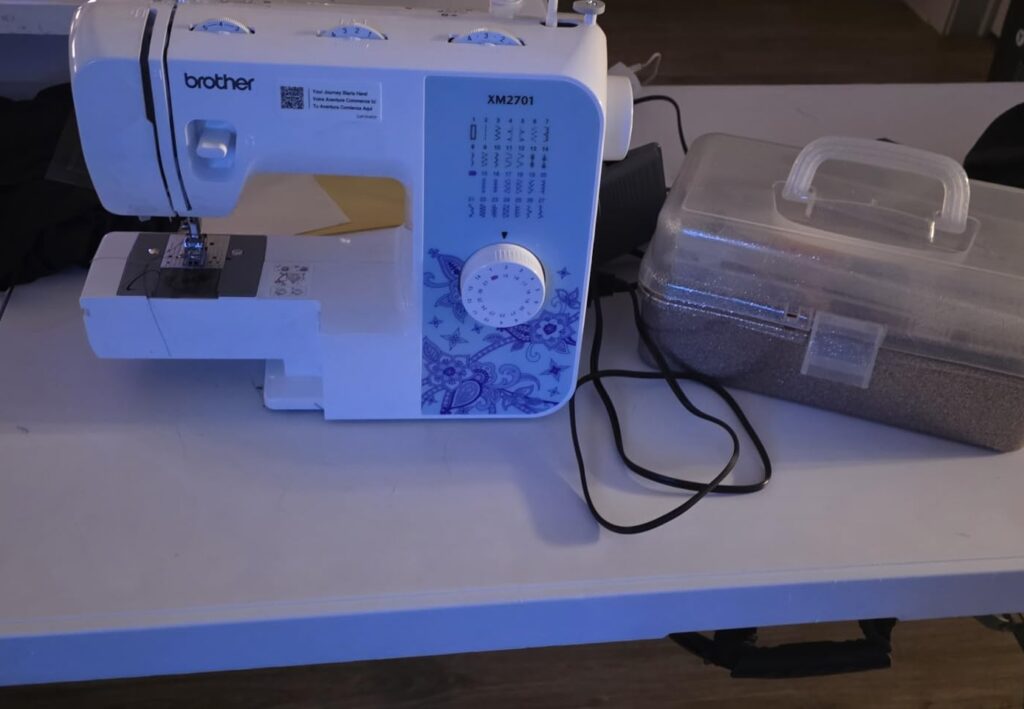
Every review article lists the specs like they’re reading from a product manual:
Cool. But here’s what they don’t tell you: most beginners use 5-7 stitches total. Straight stitch, zigzag, maybe a stretch stitch for knits. That’s it.
Having 50 stitches doesn’t make you a better sewist. It just gives you 43 more ways to feel overwhelmed.
The real question isn’t “which has more stitches?” It’s “which machine helps me actually learn to sew without wanting to throw it out the window?”
What Actually Breaks? (And When)
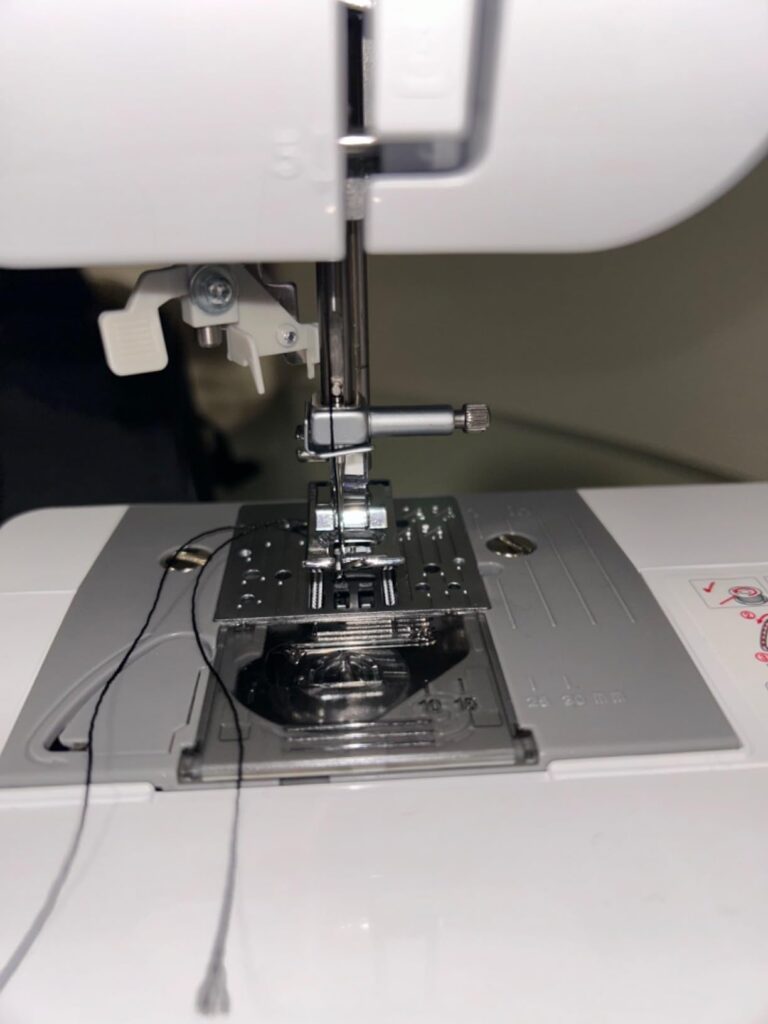
Let’s talk about something really annoying: what stops working first.
The Automatic Needle Threader Drama
Both machines advertise this feature like it’s magic. Thread goes in, needle gets threaded, everyone’s happy.
Reality check from actual users:
On the XM2701: The needle threader commonly breaks within the first year. Not “might break”—it’s mentioned so frequently in reviews and sewing forums that it’s practically a guarantee.
On the CS5055: The needle threader holds up better. Still not bulletproof, but fewer complaints about early failure.
Here’s the twist: when the XM2701’s threader breaks, the machine still works perfectly fine. You just thread the needle manually like sewists did for decades. It’s annoying, not catastrophic.
The Bobbin Quality Reality
Both machines use plastic bobbin cases because they’re budget models. That’s fine—until you’re 18 months in and the bobbin mechanism starts acting weird.
Common complaint across both models: excessive lint buildup causes thread tangling. One user mentioned having their XM2701 repaired annually for the same bobbin-related issue.
The CS5055 has fewer bobbin complaints, but that might just be because fewer people own it. The real takeaway? Neither machine is a 10-year workhorse. They’re starter machines with a 2-3 year realistic lifespan if you sew regularly.
The Tension Problem That Makes or Breaks Your Experience
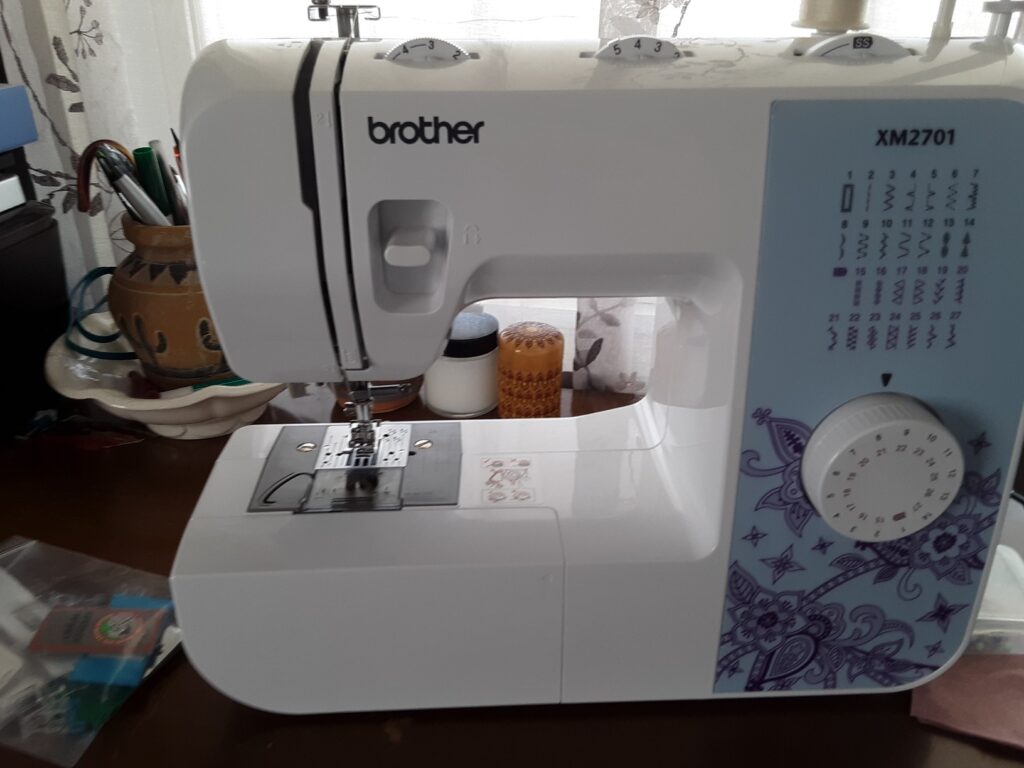
Here’s where it gets interesting. Both machines struggle with tension control—but in completely different ways that affect your learning curve.
XM2701: Manual Tension = Steeper Learning Curve
The XM2701 is mechanical. You adjust tension with a dial. When your stitches look wrong, you have to figure out why and fix it yourself.
This sounds awful, but here’s the upside: you actually learn how tension works. After a few weeks of frustration, you understand your machine. That knowledge transfers to any sewing machine you use later.
CS5055: Computer-Assisted Tension = False Confidence
The CS5055 has a computerized system that’s supposed to help with tension. It doesn’t eliminate tension problems—multiple reviews mention “uneven bobbin tension” and “consistent tension trouble with most stitches on most fabrics.”
The difference? The LCD display and computerized controls give you the illusion that the machine should handle this automatically. When tension problems occur (and they will), it’s more frustrating because the computer interface makes you think it should “just work.”
The Weight Mystery Nobody Explains
Check this out:
- CS5055: 10.65 lbs (lighter)
- XM2701: 12.6 lbs (heavier)
Wait—the machine with more features, an LCD screen, and a motor controller weighs less? How?
The answer: different internal construction. The XM2701 has more metal components in its frame, making it heavier but potentially more durable for the long haul. The CS5055 uses more plastic internals to keep weight down and hit a target price point despite the added electronics.
What this means for you:
If you plan to take your machine to classes or sew in different rooms, the CS5055’s lighter weight matters. If the machine sits on a table and never moves, the XM2701’s heavier build might mean better vibration dampening when you’re running thick fabrics through it.
Neither is “better”—they’re optimized for different use cases.
The LCD Screen: Help or Hindrance?
The CS5055’s big selling point is the LCD display that shows you which stitch you’ve selected and recommends which presser foot to use.
In theory, this sounds helpful. In practice, opinions split hard:
Team Pro-LCD: “The screen helps me remember which foot to use. I don’t have to keep checking the manual.”
Team Anti-LCD: “I spent more time scrolling through menu options than actually sewing. The XM2701’s dial is faster.”
The truth? The LCD is training wheels you might not need. If you’re the type who learns by doing and doesn’t mind checking a reference card occasionally, the dial on the XM2701 is actually more efficient. If you have anxiety about using the wrong settings and appreciate digital confirmation, the CS5055’s display will comfort you.
Neither approach is wrong—they’re different learning styles.
The Stitch Reality Check
The CS5055 advertises 50 built-in stitches vs. the XM2701’s 27 stitches.
Let’s be honest about what you’ll actually use:
- Straight stitch – 90% of beginner sewing
- Zigzag – finishing raw edges
- Stretch stitch – for knits
- Buttonhole – if you’re making clothes
- Blind hem – maybe someday
That’s five stitches. The XM2701 has all five. The CS5055 has 45 more decorative stitches that 90% of users never touch.
But here’s the nuance: the CS5055 offers 5 one-step buttonhole styles vs. the XM2701’s single buttonhole option. If you’re planning to make clothes with different button sizes, that variety is legitimately useful. If you’re hemming curtains and making tote bags, you’ll never notice.
Speed Differences That Don’t Matter
XM2701: 800 stitches per minute
CS5055: 850 stitches per minute
That’s a 50 SPM difference. In real-world use, you absolutely cannot tell the difference. Both machines sew fast enough for beginners and slow enough for control.
The speed difference is marketing fluff.
The Presser Foot Situation
Both machines include similar accessory feet, with one key difference:
XM2701 includes: Buttonhole foot, button sewing foot, narrow hemmer foot, zipper foot, blind stitch foot, zigzag foot
CS5055 includes: Buttonhole foot, zigzag foot, zipper foot, button sewing foot, overcasting foot, blind stitch foot, monogramming foot
The CS5055 swaps the narrow hemmer for overcasting and monogramming feet. The overcasting foot is genuinely useful for finishing seams without a serger. The monogramming foot? You’ll probably never use it unless you’re really into personalization.
The XM2701’s narrow hemmer foot is gold for curtains and light fabric hems. Both sets are adequate—just slightly different priorities.
The Project Runway Brand Premium (That Just Disappeared)
The CS5055 is marketed as the “Brother Project Runway” edition. Functionally, it’s identical to the Brother CP60X—same internals, just a different color faceplate (pink/white instead of all white).
Historically, the Project Runway branding added $20-30 to the price. That premium has evaporated. At $134, you’re basically getting the computerized machine at near-parity pricing with the mechanical XM2701.
This is a temporary pricing anomaly. If you’re leaning toward the CS5055, this is as cheap as it gets.
What No Review Mentions: The Noise Factor
Here’s something straight from user forums: the CS5055 runs noticeably quieter than the XM2701.
Why does this matter? If you live in an apartment with thin walls or sew while kids are napping, machine noise becomes a real concern. The XM2701’s mechanical whir is louder—not jet-engine loud, but enough that several users mentioned it specifically.
The CS5055’s motor controller keeps operation quieter. That’s not in the spec sheets, but it shows up consistently in user experiences.
Long-Term Durability: The 2-Year Reality
Let’s talk about longevity honestly.
Both machines are budget-friendly starter models. They’re not built to last 20 years. Parts are plastic where they could be metal. Internal components are adequate, not overbuilt.
Realistic lifespan with regular use: 2-3 years before you’ll encounter issues that require repair or replacement.
Realistic lifespan with occasional use: 5-7 years, maybe longer if you’re gentle.
Multiple users report XM2701 machines still running strong after 2+ years of regular use—but with caveats like “the needle threader broke” or “I’ve had to deep-clean the bobbin area multiple times.”
The CS5055 has fewer long-term reviews available (it’s less popular), but the patterns are similar: good for several years, then small issues crop up.
Neither machine should be your “forever” sewing machine. They’re stepping stones. You learn on these, decide if you love sewing, then upgrade to a $400+ machine if sewing becomes a serious hobby.
Making Final Decision: Brother XM2701 vs CS5055
Stop trying to pick the “better” machine. They’re both good enough. Instead, match the machine to how you actually think and work:
Choose the XM2701 ($129) if:
Current Price: $129
Key Specs:
27 stitches
800 SPM
12.6 lbs
Mechanical dial control
Best For: Beginners who learn by doing and prefer simple, mechanical controls
Heads Up: Automatic needle threader breaks frequently within first year
- You learn by doing and don’t mind troubleshooting
- You prefer simple controls (dial vs. menu navigation)
- You want a heavier, more stable machine that stays put
- You’re budget-conscious and $5 matters
- You don’t care about computerized features
- You plan to use 5-7 basic stitches and skip the decorative stuff
Choose the CS5055 ($134) if:
Current Price: $134
Key Specs:
- 50 stitches
- 850 SPM
- 10.65 lbs
- LCD display + computerized
Best For: Beginners who want digital guidance and quieter operation
Heads Up: More features create menu navigation complexity for simple tasks
- You appreciate digital guidance and visual confirmations
- You want multiple buttonhole styles for garment making
- You need a lighter machine for portability (classes, moving between rooms)
- You want a quieter machine for apartment living
- You value the overcasting foot for seam finishing
- You’re willing to spend $5 more for the “guided learning” experience
The Honest Bottom Line: Brother XM2701 vs CS5055
At $129 vs. $134, this isn’t about which machine is better. It’s about which learning style matches yours.
The Brother XM2701 is the mechanical, hands-on approach. You’ll struggle more at first, but you’ll understand sewing machines better when you’re done. It’s the “figure it out yourself” philosophy.
The Brother CS5055 is the guided, computerized approach. You’ll have more hand-holding and fewer initial struggles, but you might not learn the underlying mechanics as deeply. It’s the “let the computer help” philosophy.
Neither machine is perfect. Both will have tension issues you’ll need to learn to manage. Both have plastic components that’ll eventually wear. Both have automatic needle threaders that might break.
But both machines are legitimately good enough to learn on. The difference isn’t quality—it’s teaching method.
FAQs
Which machine is better for absolute beginners?
The CS5055’s LCD guidance helps if you want hand-holding. The XM2701 is better if you learn by troubleshooting. Both work—different teaching styles.
Will these machines last 5+ years?
Realistic lifespan: 2-3 years with regular use, 5-7 years with occasional sewing. They’re starter machines with plastic components, not long-term workhorses.
What breaks first on these machines?
XM2701: automatic needle threader (within first year). CS5055: presser foot alignment issues. Both have bobbin mechanism problems after 18+ months of regular use.
Can either machine handle thick fabrics like denim?
Both struggle with heavy denim despite marketing claims. They handle 2-3 layers of quilting cotton fine, but don’t expect reliable performance on thick upholstery or multiple denim layers.
Is the CS5055 worth $5 more?
Only if you value the LCD display, quieter operation, and lighter weight (10.65 lbs vs 12.6 lbs). Feature-wise, beginners won’t use most of the extra 23 stitches.
Why is the CS5055 lighter despite having more features?
It uses more plastic internal components vs. the XM2701’s heavier metal frame construction. Lighter = more portable, but potentially less durable long-term.