

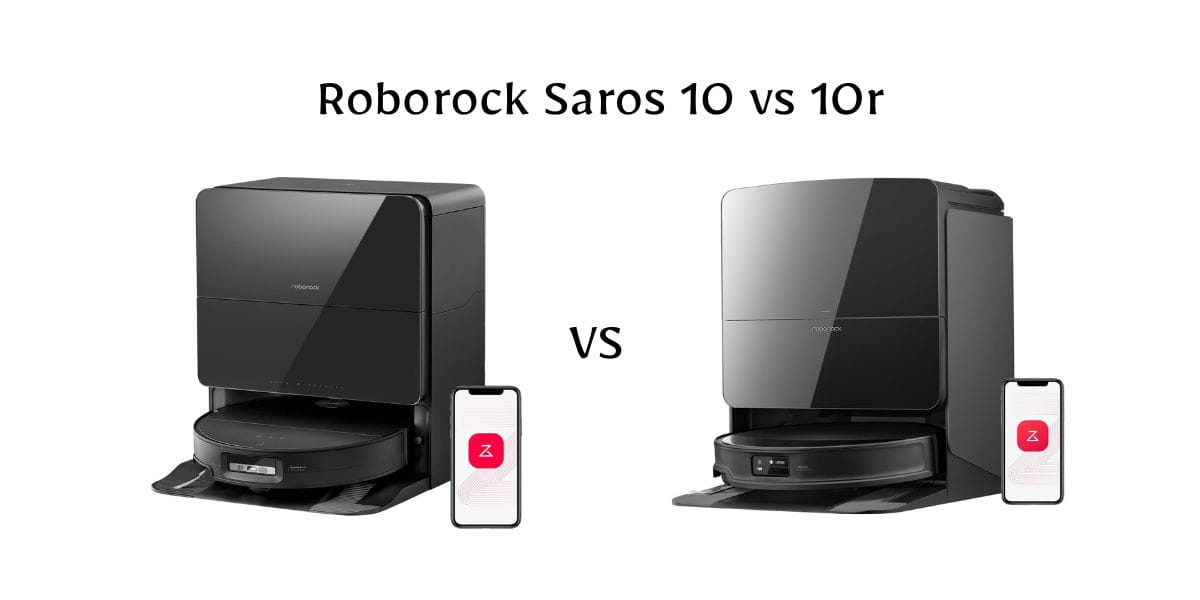
Current Price: $1599
Best for: Open hard floors, cable-heavy homes, corner cleaning
Perfect obstacle avoidance, extending spinning mops that reach every corner — the better robot for mostly hard-floor homes.
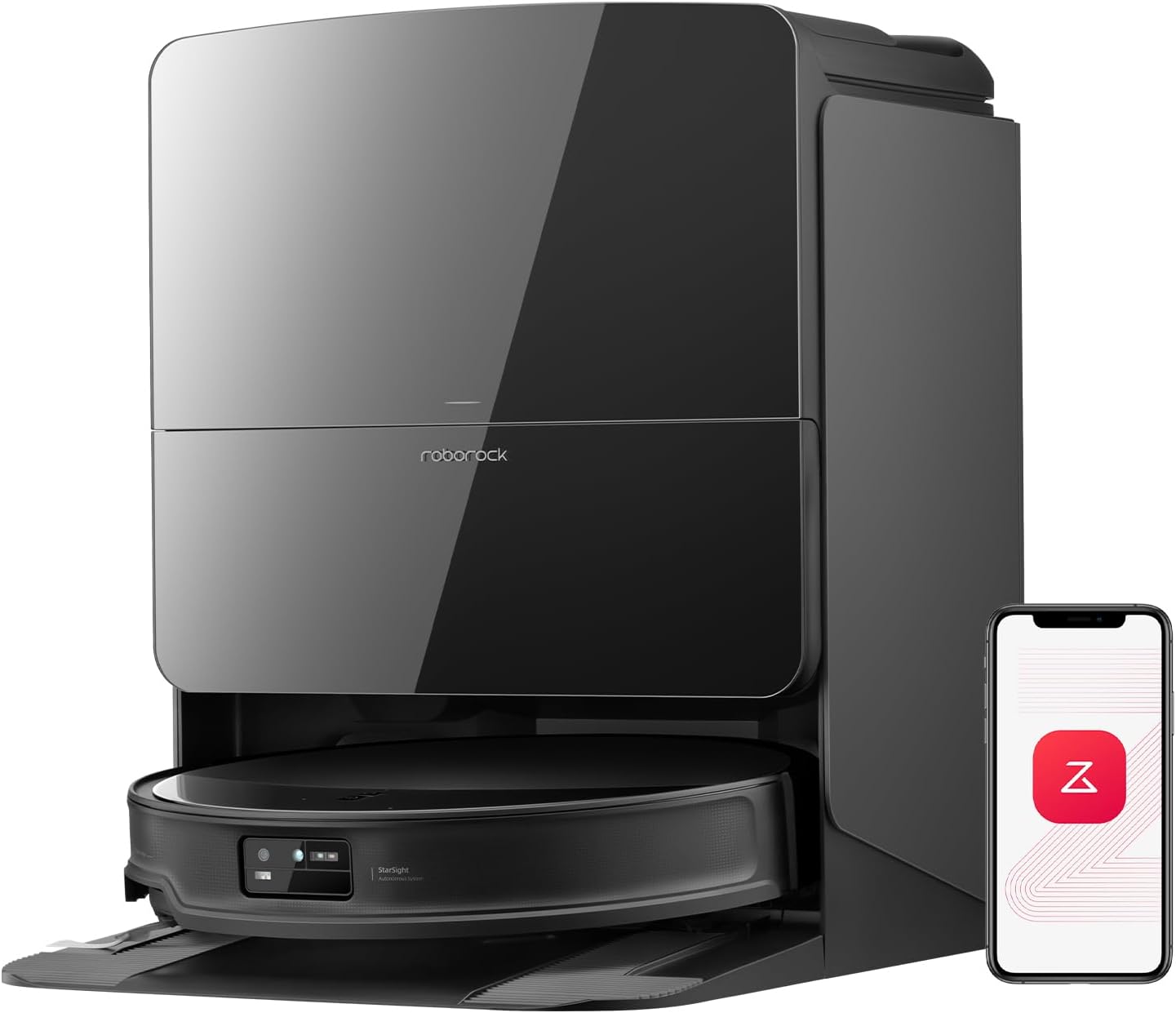

Current Price: $1099
Best for: Mixed floors, pet households, stubborn stains
The more powerful mop, the more stable firmware, and the better dock — for homes where mopping actually matters.
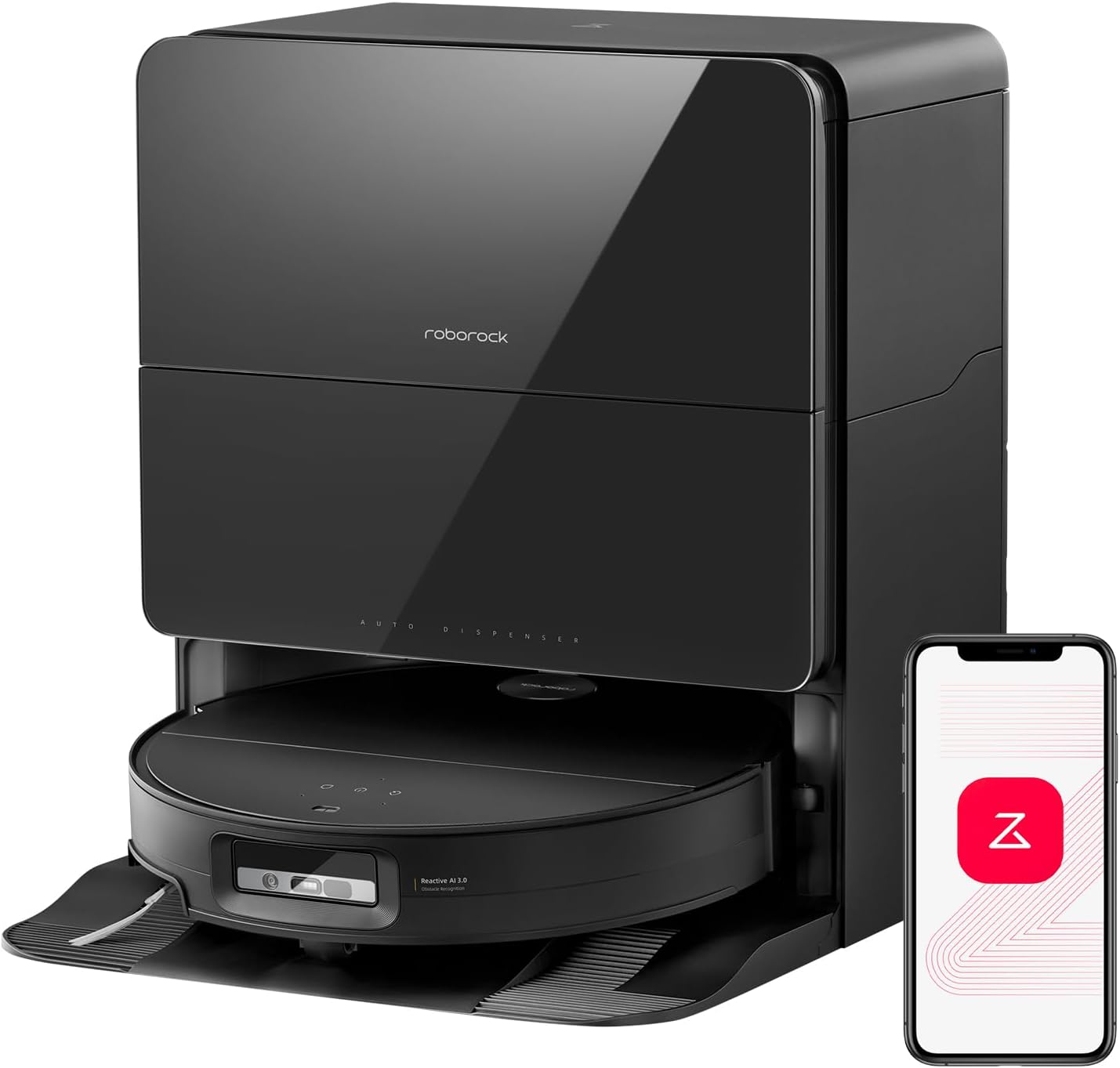
Introduction
By the time most buyers land on a Roborock Saros 10 vs 10r comparison, they’ve already done the specs research. They know both robots have suction. They know both mop. They’ve seen the bullet points. What they actually want is someone to cut through the noise and tell them: given what these machines cost today, which one makes financial and practical sense?
That’s what this article does. No padding. No fake lab tests. Just the honest breakdown of what’s changed since these robots launched — and what it means for your decision right now.
Table of Contents
TL;DR
The Saros 10 dropped to $1,099 while the 10R stays at $1,599 — yet the cheaper robot gets the newer dock, more suction, and a higher mop lift. The 10R’s only real advantages are superior obstacle avoidance and spinning mops. Unless your floors are perpetually cluttered, the Saros 10 is the smarter buy by a wide margin.
Related Articles:
At-a-glance: Roborock Saros 10 vs 10r
| Features | Roborock Saros 10 | Roborock Saros 10r👑 |
|---|---|---|
| Price | $1,099 | $1,599 |
| Suction | 22,000 Pa ✅ | ~19,000 Pa |
| Navigation | Retractable LiDAR + AI | StarSight 2.0 ✅ |
| Mopping System | VibraRise 4.0 (vibrating) | Spinning dual pads ✅ |
| Mop Lift | 18mm ✅ | 8mm |
| Dock | RockDock Ultra 2.0 ✅ | Multifunctional Dock 4.0 |
| Dock Water Temp | Up to 80°C ✅ | Standard hot water |
| Best For | Carpet + value buyers ✅ | Cluttered hard-floor homes |
| Where To Buy | Check On Amazon | Check On Amazon |
The Price Story Nobody’s Telling You
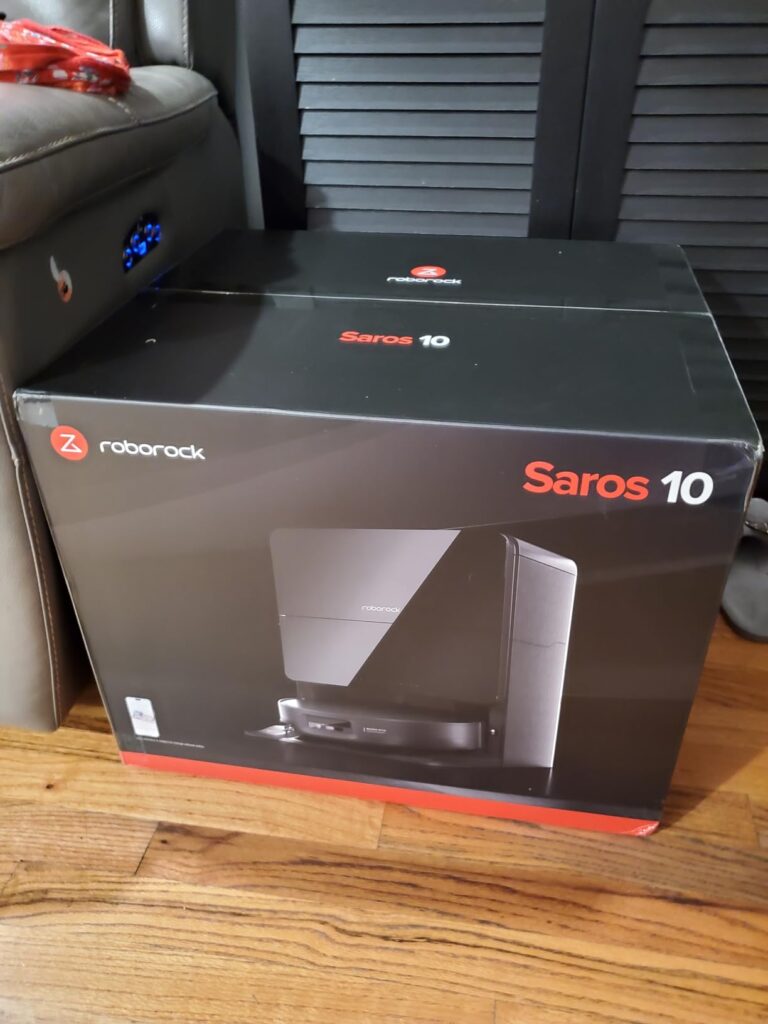
Every comparison article you’ll find about the Roborock Saros 10 vs 10r was written in early 2025 when both robots debuted at the same $1,599 price tag. At that point, the comparison was genuinely difficult. Two robots, same price, different philosophies. Coin flip territory.
That’s no longer the situation.
Roborock Saros 10: $1,099 on Amazon Roborock Saros 10R: $1,599 on Amazon
The Saros 10 has dropped $500. The 10R hasn’t budged.
This single fact changes everything about this comparison.
So before we talk about spinning mops versus vibrating mops, before we debate navigation systems, before any of that — understand this: you are now deciding whether features exclusive to the 10R are worth a $500 premium. That reframe matters enormously.
What You Actually Get for $500 More?
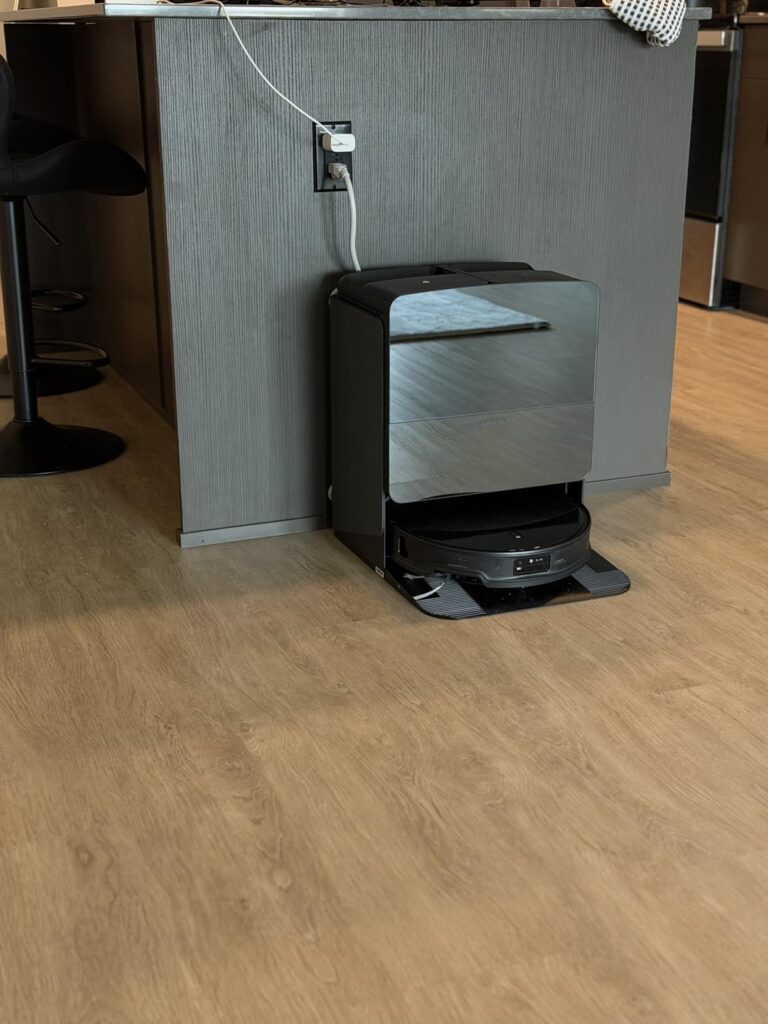
Let’s strip this down to the only differences that justify a price gap. Not the shared features (and there are many), just the two things the 10R has that the Saros 10 doesn’t.
Difference #1: The Navigation System
The Saros 10R uses StarSight Autonomous System 2.0 — a solid-state LiDAR system embedded flush into the robot’s body. There’s no dome on top. Instead, a dual-transmitter system, a 3D time-of-flight sensor, and VertiBeam vertical structured light sensors work together to give the robot an almost uncanny awareness of its environment.
The result: the 10R won Vacuum Wars’ Mid-Year Best Obstacle Avoidance Award for 2025. In testing, it avoided every obstacle placed in its path — including socks and loose cables — before physically touching them.
The Saros 10, by contrast, uses a retractable LiDAR dome that pops up when cleaning and retracts when docking. It pairs this with an RGB camera and Reactive AI 3.0 with triple structured light sensors. It navigates well. It avoids most obstacles. But in independent head-to-head evaluations, the 10R’s StarSight system edges it out in cluttered, obstacle-dense environments.
The practical reality: In a clean, minimalist home where you pick things up before the robot runs — the navigation gap is largely irrelevant. Both robots will clean your floors efficiently. In a home with cables on the floor, kids’ toys, pet bowls, chair legs close together, or lots of furniture — the 10R’s StarSight system is a genuinely meaningful upgrade that you’ll feel every single run.
Difference #2: The Mopping System
This is where the robots take a philosophically different approach.
The Saros 10R uses two spinning mop pads that rotate and apply downward pressure to scrub floors. The spinning action generates more friction, uses slightly more water per pass, and excels at removing surface grime, spills, and daily kitchen grease. A 6-month owner reviewing the robot described the spinning mops as noticeably superior to any vibrating pad system they’d used previously — particularly on hard floors where the robot mops and then vacuums, leaving floors genuinely clean.
The Saros 10 uses VibraRise 4.0 — a single mop pad that vibrates at up to 4,000 vibrations per minute with significant downward pressure. It can handle dried-on stains with its hot water sonic vibration. The mop lifts 18mm to clear carpets (versus 8mm on the 10R’s twin spinning pads). This higher lift is a practical advantage: it means the Saros 10 is more confident crossing the border between hard floors and thick rugs.
Here’s the catch that nobody mentions: if you have deep-pile or thick carpets, the Saros 10’s 18mm mop lift matters more than anyone’s mopping comparison. Multiple Reddit users with plush carpets reported satisfaction issues with the 10R’s 8mm lift — the mop pads occasionally contacted carpet fibers. The Saros 10’s higher lift gives it a cleaner separation.
What the 10R Doesn’t Have That the Saros 10 Does?
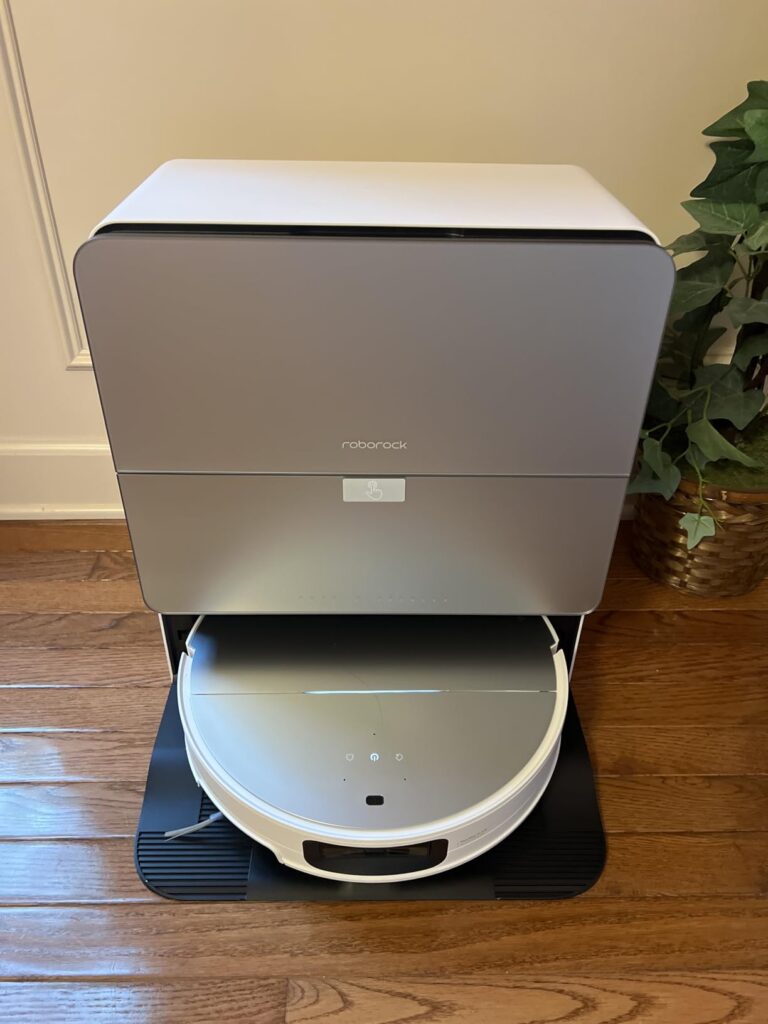
This is the part of the comparison that feels backwards — and it’s the most important thing to understand.
The Saros 10 Has the Newer, Better Dock
Roborock ships each robot with a different dock, and the cheaper robot got the upgrade.
The Saros 10 ships with the RockDock Ultra 2.0 — Roborock’s newest docking station. It features:
- Hot water mop washing up to 80°C (176°F)
- Dynamic temperature settings between 50–80°C
- Heated drying air at 60°C (140°F)
- Hinged bin access (easier to empty and clean)
- Self-cleaning with automatic detergent dispensing
- Sensors that monitor mop water dirtiness to determine how much cleaning is needed
The Saros 10R ships with the Multifunctional Dock 4.0 — the previous generation. It washes mop pads with hot water and dries them with hot air, but without the temperature range flexibility or the newer hygiene features of the Ultra 2.0.
Both docks handle dust collection, mop washing, and heated drying. But for a robot you’re spending $1,599 on, getting the older dock while the $1,099 version gets the newer one is a detail worth sitting with.
The Saros 10 Has Stronger Suction
The Saros 10 is rated at 22,000 Pa of suction. The Saros 10R is rated at approximately 19,000–20,000 Pa depending on the source (Roborock’s own specifications page lists differing figures across markets).
For most flooring — hardwood, tile, low-pile carpet, area rugs — neither robot will leave debris behind. Both are in the upper echelon of cleaning performance. For high-pile carpet or homes with heavier debris (pet hair, larger particles, construction dust), the suction gap is worth noting. In Vacuum Wars’ evaluations, the Saros 10 scored 21/24 in their overall scoring; the Saros 10R scored 24/24 — but much of that 10R advantage came from obstacle avoidance and navigation scores, not raw cleaning performance.
The $500 Math: Roborock Saros 10 vs 10r
Let’s be direct about what that $500 premium buys if you choose the 10R over the Saros 10 today:
✅ StarSight 2.0 navigation (meaningfully better obstacle avoidance in cluttered spaces)
✅ Spinning mop pads (marginally better on set-in floor grime)
And what you give up or trade down on:
❌ You get the older Multifunctional Dock 4.0 instead of the RockDock Ultra 2.0
❌ You get slightly lower suction (19-20K Pa vs 22K Pa)
❌ You get an 8mm mop lift instead of 18mm (matters for thick carpet transitions)
❌ You spend $500 more
For most buyers, the math doesn’t favor the 10R at current pricing. You are paying a 45% premium for two specific features that are genuinely impressive, while getting a less capable dock, less suction, and a lower mop lift.
The 10R makes financial sense in a narrow but legitimate scenario, which we’ll get to shortly.
Deep Dive: The Features Both Robots Share (and Why They Matter)
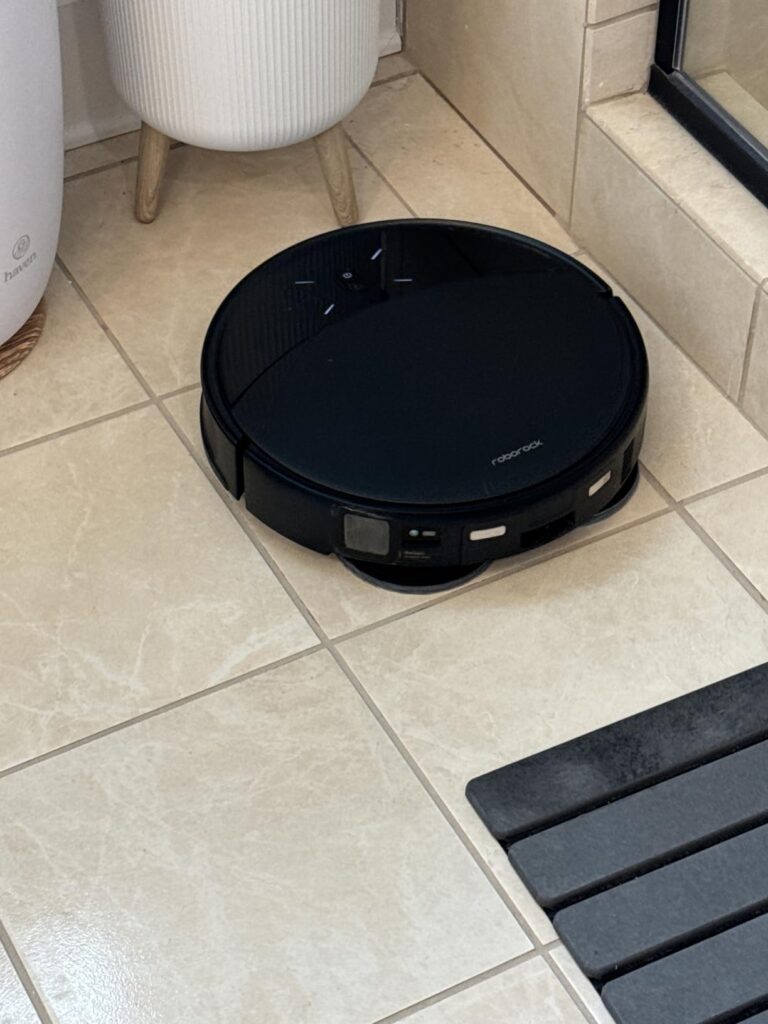
Before the recommendation, it’s worth understanding what you’re getting regardless of which model you choose — because both robots share a feature set that would have been science fiction five years ago.
The DuoDivide Brush System
Both robots use a dual rubber roller brush with a gap in the center to channel hair through rather than wrapping it around the brush. In real-world use, both achieved 100% tangle resistance in hair evaluations. If you’ve ever spent ten minutes cutting hair off a robot vacuum brush with scissors — this is a solved problem on both models.
AdaptiLift Chassis
Both robots can cross thresholds up to 40mm (about 1.5 inches) and mount single thresholds up to 30mm. For context, standard door threshold height is typically 6–13mm. These robots handle them without hesitation. The AdaptiLift system also means both robots sit lower to the ground than traditional dome-LiDAR robots, fitting under more furniture.
Matter 2.0 Integration
Both robots work with Alexa, Google Home, Siri Shortcuts, and Matter 2.0. For smart home users who want to trigger cleaning when everyone leaves the house, or integrate the robot into broader home automation — both deliver. Matter 2.0 specifically enables room-level control through Apple Home and other platforms in ways that older integrations didn’t support.
Extending Side Brush
Both robots have an auto-extending side brush that reaches into corners and along edges more aggressively than older fixed-brush designs. Edge cleaning is a common weak point in robot vacuums; both Saros models largely address this.
Pet Features
Both models include Roborock’s Pet Snaps feature, which captures photos of pets during cleaning runs. Both support Video Call & Cruise — you can remotely view a live camera feed and drive the robot to check on a pet. For pet owners who travel, this is a genuinely useful feature shared across both models.
The Dock Comparison: What “Fully Automated” Actually Means in 2026
Both dock stations are among the most capable auto-cleaning stations available. Here’s what both handle entirely without your involvement:
- Emptying the robot’s dustbin into a sealed bag
- Filling the robot’s onboard water tank for mopping
- Washing the mop pads with hot water after each mop cycle
- Drying the mop pads with heated air to prevent mildew
- Dispensing cleaning detergent automatically
- Monitoring water quality to determine cleaning intensity
What this means practically: the robot, dock, and app function as a closed system. You schedule a clean. It runs. It empties itself, washes its own mops, dries them, and waits for the next run. The main human task is emptying the external dustbin bag every few weeks and refilling the clean water tank.
The Saros 10’s RockDock Ultra 2.0 adds the temperature flexibility (50–80°C wash range) and hinged bin access that makes maintenance slightly more convenient. It’s a better dock. The 10R’s Multifunctional Dock 4.0 is still excellent — it just doesn’t have these newer-generation refinements.
Setting Up Either Robot: What the First Week Looks Like?
Initial mapping takes one to two cleaning runs to complete. Both robots build their own floor plan without user intervention — they go room to room, identify walls, furniture, and open areas, and construct a persistent map that improves over time.
The Roborock app is widely regarded as one of the best in the category: intuitive, detailed, and genuinely useful. You can draw room boundaries, set no-go zones, adjust suction per room, schedule different cleaning routines for different days, and monitor the robot’s real-time position during cleaning. Matter 2.0 support means you can also connect it to Apple Home or other platforms without losing native app functionality.
A note on firmware: both robots — particularly the 10R — received multiple firmware updates in the months following launch. If you’re buying today (not in early 2025 when early adopters encountered bugs), you’ll benefit from months of post-launch refinements that were already pushed to the device before it ships.
First-week friction points real owners mention:
- Initial mapping runs can take longer than expected in larger homes (2,000+ sq ft)
- App setup requires account creation and Wi-Fi at 2.4GHz or 5GHz — standard for most routers
- The dock placement matters more than buyers expect; 1.5 feet of clearance on each side is genuinely needed for the dock arms to function
- Some users with multi-floor homes prefer buying two units (one per floor) rather than carrying the robot between levels — the map persistence is per-unit
Maintenance Reality: 6 Months In
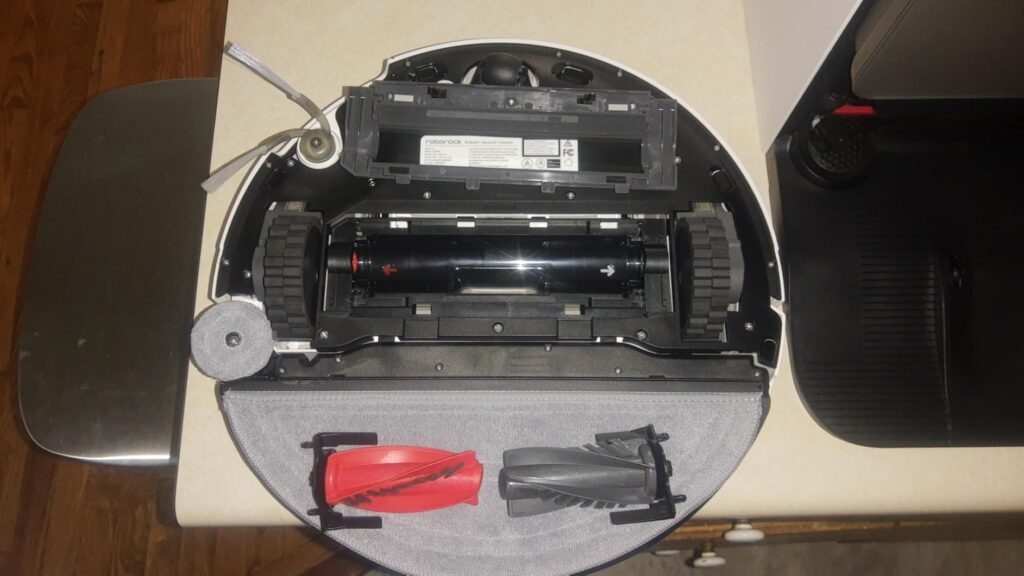
By the time you’ve owned either robot for six months, here’s what ownership actually looks like based on community feedback:
Monthly tasks (both models):
- Clean the front bumper sensor with a dry microfiber cloth (takes 2 minutes)
- Check and clean the cliff sensors underneath
- Wipe the dock’s self-cleaning tray
Every 4–6 weeks:
- Empty the external dustbin bag (the robot fills it slowly; most users do this every 3–5 weeks)
- Refill the clean water tank in the dock
- Check the filter; replace every 2–3 months depending on usage
Replacement consumables (approximate annual cost): Dust bags, filters, and mop pads are the regular consumables. Annual consumable costs for either model are typically $50–$80 at Amazon prices depending on usage frequency. Roborock makes consumables available directly and through Amazon; third-party options exist but compatibility varies.
Long-term durability: Both robots launched in early 2025, so 12-month ownership data is only just beginning to emerge. No pattern of hardware failures has appeared in the community for either model as of early 2026. The most common long-term concern across premium robot vacuums generally is brush wear and motor performance over 2–3 years — nothing Saros-specific has emerged yet.
The Verdict: Roborock Saros 10 vs 10r
Choose the Roborock Saros 10 ($1,099) if:
Current Price: $1099
Best for: Mixed floors, pet households, stubborn stains
The more powerful mop, the more stable firmware, and the better dock — for homes where mopping actually matters.
Your home has thick or high-pile carpets. The 18mm mop lift is a real advantage. The Saros 10 separates the mop from carpet more aggressively, and its 22,000 Pa suction handles deep pile fibers better. Users with traditional carpeted homes consistently report more satisfaction with the Saros 10 than the 10R.
Your floors are generally tidy when the robot runs. If you’re not dealing with constant floor clutter — cables, kids’ toys, randomly placed items — the navigation gap between the two robots won’t matter in your daily experience. The Saros 10 navigates extremely well for a non-StarSight robot.
You want the newest dock technology. For a robot with a dock that’s going to run autonomously for years, getting the RockDock Ultra 2.0 — with its better temperature range, hinged bin access, and improved hygiene design — over the older Multifunctional Dock 4.0 is a meaningful long-term benefit that you’ll interact with every week.
You value suction over spinning mops. The 22,000 Pa suction advantage matters for pet hair households, for homes with heavier debris loads, and for carpet cleaning performance over time.
You want the most value per dollar. At $1,099 — with a newer dock, more suction, higher mop lift, and essentially equivalent cleaning performance — the Saros 10 represents the stronger value proposition of the two robots by a significant margin.
Choose the Roborock Saros 10R ($1,599) if:
Current Price: $1599
Best for: Open hard floors, cable-heavy homes, corner cleaning
Perfect obstacle avoidance, extending spinning mops that reach every corner — the better robot for mostly hard-floor homes.
Your home is consistently obstacle-dense during cleaning runs. If you have cables on floors, pets that move their toys, small objects that shift around, tight spaces between furniture legs, or you run the robot while the household is occupied and things get left on the floor — StarSight 2.0’s obstacle avoidance is a quality-of-life upgrade that you’ll feel every single cleaning run.
You have predominantly hard floors with cooking traffic. Kitchen grease, oily residue, and food spills respond better to the 10R’s spinning mop pad system. If your home is mostly tile or hardwood with a kitchen that gets real cooking use, the rotating mop action is a genuine advantage over vibrating pad systems.
You’ve already decided on a $1,599 budget and want the best navigator. If the price difference doesn’t factor into your decision and you simply want the robot that performed best in independent obstacle avoidance evaluations in 2025, the 10R is that robot.
You live in a single-story home with no thick rugs. The 8mm mop lift limitation is irrelevant if you have no high-pile carpet. Combined with hard floors and an obstacle-rich environment, the 10R’s strengths align perfectly.
The Bottom Line: Roborock Saros 10 vs 10r
At launch, comparing the Roborock Saros 10 and Saros 10R was a genuinely close call. Same price, different feature priorities — navigation versus suction, spinning mops versus vibrating mops. A reasonable person could have gone either way.
Today, that’s not the comparison you’re making.
You’re deciding if the Saros 10R’s StarSight 2.0 navigation and spinning mop pads are worth $500 more than the Saros 10 — which now also happens to come with a newer dock, more suction, and a higher mop lift.
For most buyers, they’re not. The Saros 10 at $1,099 delivers equal or better performance in most home configurations, gets the better dock, and frees up $500.
For buyers with genuinely cluttered floors and hard-surface homes, the 10R’s navigation advantage is real and the $500 premium is defensible.
Everyone else: the $1,099 robot is the smarter buy in 2026.
FAQs
Q: Is the Saros 10R worth $500 more than the Saros 10?
Only if your floors stay cluttered during cleaning runs — that’s the one scenario where the 10R’s StarSight navigation pays for itself.
Q: Which robot cleans better?
The Saros 10. It has stronger suction (22,000 Pa vs ~19,000 Pa) and Roborock’s own reps rank it above the 10R in cleaning performance.
Q: Which dock is better?
Ironically, the cheaper Saros 10 gets the newer RockDock Ultra 2.0 with hotter water (up to 80°C) and better drying. The 10R gets the older Multifunctional Dock 4.0.
Q: Which is better for thick carpets?
Saros 10. Its mop lifts 18mm off the ground vs the 10R’s 8mm, giving it a cleaner separation from high-pile rugs.
Q: Are mop pads interchangeable between the two?
No — completely different mopping systems. They’re not compatible.
Q: Which robot should most people buy?
The Saros 10 at $1,099. Better dock, more suction, higher mop lift — for $500 less.